When the Fate of 200 Men Came Down to One Bird
There are war stories, and then there are war stories so unbelievable they sound like Hollywood fiction. The tale of Cher Ami, a carrier pigeon who flew through a hail of enemy bullets to deliver a message that saved nearly 200 American soldiers, falls firmly into the second category. This isn't just another feel-good animal story—it's the account of how the fate of an entire battalion came down to whether one severely wounded bird could keep flying long enough to reach help.
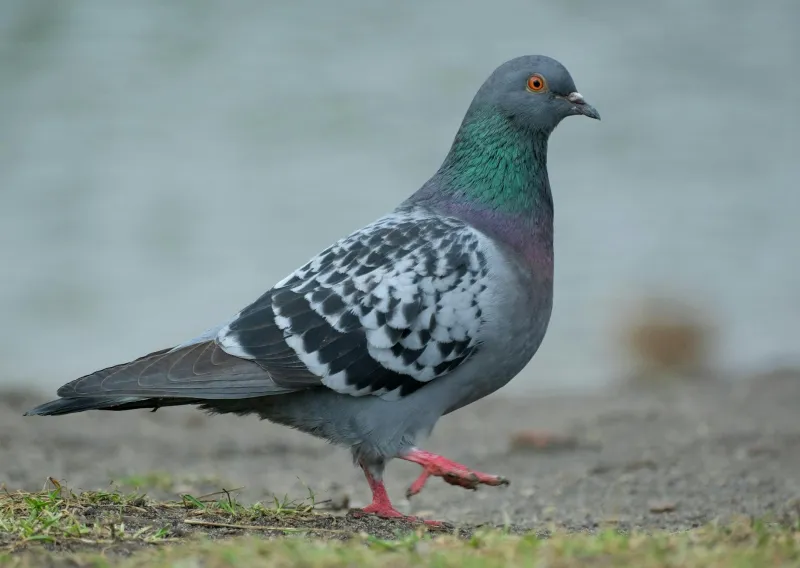
On October 4, 1918, in France's Argonne Forest, what should have been a routine military operation turned into a nightmare scenario that would require nothing short of a miracle to resolve. That miracle came in the form of a small, dark-checkered pigeon who refused to die.
The Battalion That Disappeared Into Hell
Major Charles Whittlesey's 1st Battalion of the 308th Infantry Regiment was supposed to advance through the Argonne Forest as part of a coordinated Allied offensive. Instead, they walked straight into what would become known as one of World War I's most desperate situations.
The battalion pushed forward according to orders, but the units on their flanks failed to advance, leaving Whittlesey's 550 men completely surrounded by German forces. They were trapped in a small depression in the forest, cut off from supplies, reinforcements, and communication with headquarters. Worse yet, American artillery began shelling their position, not knowing friendly forces were trapped there.
For five days, the "Lost Battalion" held their ground while German forces attacked repeatedly. Men were dying from enemy fire, friendly fire, and lack of medical supplies. Their situation was beyond desperate—it was impossible.
The Message That Had to Get Through
By October 4th, Major Whittlesey was down to fewer than 200 effective soldiers. American artillery was still pounding their position, killing his own men. He had one chance to save his battalion: get a message through to headquarters calling off the friendly fire and requesting immediate rescue.
The problem was communication. Radio equipment had been destroyed. Telephone lines were cut. Runners sent through the forest were either killed or captured. Whittlesey had only one option left: the U.S. Army Signal Corps' carrier pigeons.
Two pigeons had already been sent with messages. Both were shot down by German snipers who had learned to watch for the birds. Cher Ami was Whittlesey's last pigeon—his final chance to save what remained of his battalion.
The message Cher Ami carried was desperately simple: "We are along the road parallel to 276.4. Our own artillery is dropping directly on us. For heaven's sake, stop it."
The Flight That Defied Every Odd
When Cher Ami was released at 3:15 PM, German soldiers immediately opened fire. This wasn't random shooting—they had specifically positioned snipers to target carrier pigeons, knowing the trapped Americans would try to communicate this way.
What happened next sounds like something from a war movie, except no screenwriter would dare make it this dramatic. Cher Ami was shot through the breast, blinding one eye. A bullet shattered the leg carrying the message capsule, leaving it hanging by a tendon. The bird should have died instantly, or at minimum, crashed to the forest floor.
Instead, Cher Ami kept flying.
For 25 miles, through continued enemy fire, with a bullet hole through the chest and a leg barely attached to its body, the pigeon flew toward American headquarters. The flight that should have taken 30 minutes stretched to 65 minutes as the wounded bird struggled to stay airborne.
The Message That Stopped the Killing
When Cher Ami finally collapsed at the American headquarters loft, handlers found the bird barely alive, covered in blood, with the message capsule still attached to the mangled leg. The message was delivered to headquarters within minutes.
The friendly artillery fire stopped immediately. Rescue operations began. Of the original 550 men in the Lost Battalion, 194 were rescued alive, many of them wounded but breathing because one pigeon refused to give up.
Army medics worked frantically to save Cher Ami's life. They couldn't save the shattered leg, but they carved a small wooden leg to replace it. The bird survived, becoming the most famous pigeon in American military history.
A Hero's Recognition
Cher Ami's story was so remarkable that it reached the highest levels of both American and French military command. The French government awarded the pigeon the Croix de Guerre, France's highest military honor, making Cher Ami one of only a handful of animals ever to receive the decoration.
General John J. Pershing, commander of American forces in Europe, personally commended the bird. When Cher Ami died in 1919, the body was preserved and mounted, eventually finding a permanent home in the Smithsonian Institution, where visitors can still see the bird that saved the Lost Battalion.
The Smithsonian display includes Cher Ami's wooden leg and the actual message capsule that carried Whittlesey's desperate plea for help. It's one of the museum's most popular exhibits, drawing visitors who can hardly believe such a story could be real.
The Impossible Math of Survival
What makes Cher Ami's story truly unbelievable isn't just the dramatic flight—it's the mathematical impossibility of what happened. A pigeon shot through the chest and partially blinded should not be able to maintain flight for 25 miles. A bird with a shattered leg should not be able to navigate accurately while in shock from blood loss. The odds against successful completion of this mission were astronomical.
Yet 194 American soldiers owed their lives to the fact that this particular pigeon somehow defied every reasonable expectation of what was physically possible.
Military historians have analyzed the Lost Battalion incident extensively, and they consistently reach the same conclusion: without Cher Ami's successful flight, the remaining soldiers would have died from continued friendly fire and German attacks. There was no backup plan, no alternative communication method, no other way to call off the artillery bombardment.
The Legacy of an Impossible Flight
Cher Ami's story became legendary during the war and has remained one of the most famous animal hero stories in American military history. The bird has been featured in documentaries, books, and museum exhibits. A memorial statue stands at Fort Monmouth, New Jersey, honoring Cher Ami and other military carrier pigeons.
But perhaps the most fitting tribute to Cher Ami is the simple fact that 194 men got to go home to their families because one small bird refused to accept the impossible. In a war defined by massive casualties and mechanical slaughter, the fate of nearly 200 soldiers came down to the determination of a single pigeon who somehow found the strength to keep flying when every instinct should have told it to fall.
That's not just a war story—that's proof that sometimes reality is stranger and more inspiring than anything fiction could imagine.