The Greatest Mistake in Packaging History: How a Wallpaper Flop Became the World's Favorite Stress Reliever
The Wallpaper Revolution That Wasn't
In 1957, two engineers sat in a garage in Hawthorne, New Jersey, convinced they were about to revolutionize interior design. Alfred Fielding and Marc Chavannes had a vision: textured plastic wallpaper that would transform boring walls into stunning focal points. What they actually created was something far more important—though it would take them years of failure and frustration to realize it.
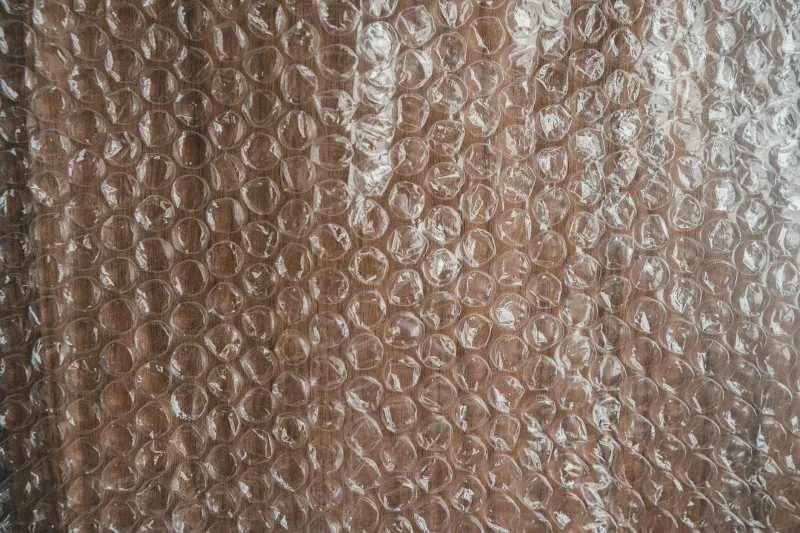
Their invention process was surprisingly simple. The duo sealed two plastic shower curtains together, trapping air bubbles between the layers to create a three-dimensional texture. The result looked promising: a translucent material with an interesting bumpy pattern that caught light beautifully. They called it "Air Cap" and prepared to corner the wallpaper market.
There was just one problem: nobody wanted to put it on their walls.
When Good Ideas Go Bad
Fielding and Chavannes spent the next several years trying to convince Americans that bubble-textured walls were the future of home decor. They pitched their product to wallpaper manufacturers, interior designers, and home improvement stores, but the response was consistently lukewarm. The material was too unusual, too industrial-looking, and frankly too weird for most people's living rooms.
Undeterred, the inventors pivoted to their backup plan: greenhouse insulation. Surely farmers and gardeners would appreciate a lightweight, insulating material that could protect plants while still letting light through? This seemed like a natural fit, but once again, the market wasn't interested. Air Cap was too expensive for agricultural use, and other insulation materials worked just as well for a fraction of the cost.
By the early 1960s, Fielding and Chavannes found themselves with a warehouse full of a product nobody wanted, despite its obvious quality and innovative design. They had solved a problem that apparently didn't exist, creating a solution in search of a purpose.
The Accidental Discovery of Purpose
The breakthrough came from an unexpected source: IBM. In 1961, the computer giant was looking for a way to protect their delicate electronic equipment during shipping. Traditional packing materials like newspaper and wood shavings weren't reliable enough for sensitive machinery, and foam padding was expensive and bulky.
Someone at IBM discovered Air Cap and realized its potential as protective packaging. The trapped air bubbles provided excellent cushioning, the material was lightweight enough not to add significant shipping costs, and it could be cut to fit any size package. Most importantly, it actually worked—computers arrived at their destinations undamaged.
Fielding and Chavannes finally had their market, though it was nothing like what they had originally envisioned. Instead of beautifying homes, their creation was destined to spend its life hidden inside cardboard boxes, protecting everything from electronics to glassware to fragile collectibles.
The Birth of an Obsession
What the inventors couldn't have predicted was the psychological impact of their accidental creation. The moment people started receiving packages wrapped in what was now called "bubble wrap," they discovered something magical: popping those little air bubbles was incredibly satisfying.
The phenomenon started small—a few satisfying pops after unpacking a new purchase. But it quickly became something more. Office workers began hoarding sheets of bubble wrap in their desks. Children fought over who got to pop the packaging from family purchases. Adults found themselves mindlessly popping bubbles while watching television or talking on the phone.
Scientists would later explain that the repetitive action of popping bubble wrap triggers the release of endorphins, providing a genuine stress-relief benefit. The sound, the tactile sensation, and the small sense of destruction and completion all combine to create a surprisingly powerful psychological experience. Fielding and Chavannes had accidentally invented one of the world's most effective stress toys.
From Failure to Fortune
By the 1970s, bubble wrap had become ubiquitous in American shipping and packaging. The Sealed Air Corporation, which Fielding and Chavannes founded to manufacture their invention, grew into a billion-dollar company. Their failed wallpaper had become an essential part of the global economy, protecting millions of packages every day.
The irony wasn't lost on the inventors. They had spent years trying to convince people to put their product on display in their homes, only to discover that its true value lay in being thrown away after a few minutes of satisfying destruction. What they thought was a decorative material turned out to be the perfect disposable stress reliever.
The cultural impact of bubble wrap extended far beyond its practical applications. It spawned countless internet videos, stress-relief products, and even a dedicated "Bubble Wrap Appreciation Day" celebrated every last Monday in January. Apps were developed to simulate the popping experience for people who couldn't access the real thing. Bubble wrap had transcended its humble origins to become a genuine cultural phenomenon.
The Lesson in Beautiful Failure
The story of bubble wrap is a perfect example of how the best innovations often come from the most unexpected places. Fielding and Chavannes spent years trying to force their invention to fit their original vision, when its true purpose was something they never could have imagined.
Today, Sealed Air Corporation produces billions of square feet of bubble wrap annually, protecting packages and providing stress relief to people around the world. The company has developed countless variations of the original concept, from anti-static versions for electronics to biodegradable options for environmentally conscious consumers.
Marc Chavannes, who lived to see his accidental invention become a global phenomenon, often reflected on the strange journey from failed wallpaper to packaging revolution. In interviews, he expressed amazement that something so simple—two pieces of plastic with air trapped between them—could have such a lasting impact on the world.
The next time you find yourself popping bubble wrap, remember that you're participating in one of history's most successful accidents. Two engineers tried to change how we decorate our walls and instead changed how we ship our packages and manage our stress. Sometimes the best discoveries happen when we're trying to solve completely different problems—and sometimes the things we throw away turn out to be more valuable than the things we're trying to protect.