The Legend Everyone Believes
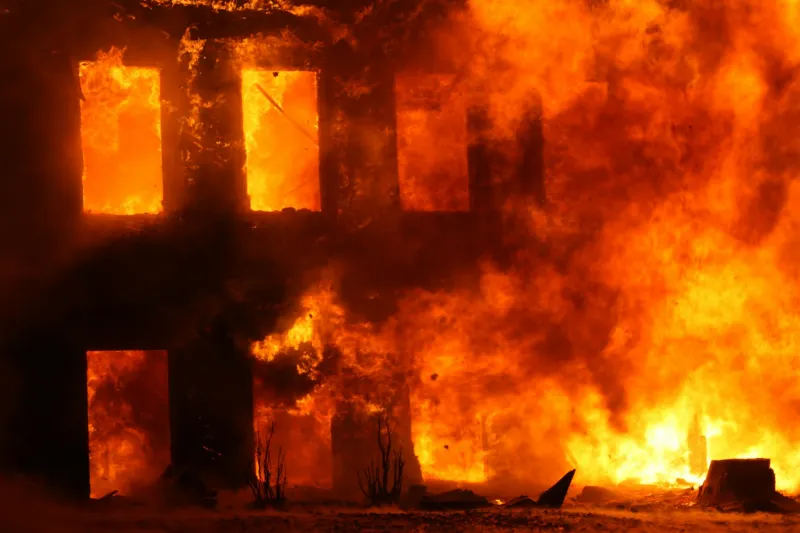
Every American schoolchild learns the same story: on October 8, 1871, Mrs. Catherine O'Leary was milking her cow in a barn behind her Chicago home when the animal kicked over a kerosene lantern. The resulting fire consumed 2,100 acres, killed at least 300 people, destroyed 17,500 buildings, and left one-third of Chicago's population homeless.
It's a perfect story—simple, visual, and satisfyingly absurd. A single clumsy cow accidentally triggered the most catastrophic urban fire in American history. There's just one problem: it never happened.
The Reporter's Confession
The cow story was entirely invented by Chicago Republic reporter Michael Ahern, who admitted as much in 1893—twenty-two years after the fact. "I thought it would make good copy," Ahern confessed. "I never dreamed it would be taken seriously."
Ahern had been assigned to cover the fire's aftermath, but like many reporters of the era, he wasn't particularly concerned with strict factual accuracy. The O'Leary family lived near where the fire started, they were Irish immigrants (a group facing significant prejudice), and they owned a cow. That was enough raw material for Ahern to craft his barnyard tale.
The fabricated story spread faster than the fire itself. Within days, newspapers across the country were reprinting Ahern's account. Within weeks, it had become accepted fact. By the time Ahern tried to set the record straight two decades later, the cow had already carved out its permanent place in American folklore.
What Actually Happened
The fire definitely started somewhere around the O'Leary property on DeKoven Street around 8:30 PM on October 8, 1871. But beyond that basic fact, the historical record becomes frustratingly murky.
The O'Leary family was actually asleep when the fire began—Mrs. O'Leary had finished her evening milking hours earlier. A neighbor, Daniel "Peg Leg" Sullivan, claimed he saw flames coming from the barn and rushed to wake the family. But Sullivan's own account changed multiple times, and some historians suspect he might have accidentally started the fire himself while visiting the barn.
Other theories abound: spontaneous combustion of hay, a gambling party gone wrong, even a meteor shower that was documented in the area that same night. The official investigation concluded only that the fire "originated in a barn owned by Patrick and Catherine O'Leary," but stopped short of identifying a specific cause.
The Perfect Storm
What made the fire so devastating wasn't how it started, but the conditions that allowed it to spread. Chicago in 1871 was essentially a tinderbox waiting for a spark.
The city had experienced one of its driest summers on record—only one inch of rain had fallen between July and October. Most buildings were constructed of wood, including the sidewalks, streets, and even many rooftops. The Chicago River and Lake Michigan provided natural firebreaks, but strong southwestern winds that night carried burning debris across these barriers.
The fire department was already exhausted from fighting a massive blaze the previous day that had consumed four blocks. When the O'Leary barn ignited, the closest fire company was initially sent to the wrong address due to a miscommunication at the alarm office.
The Aftermath That Rebuilt America
The Great Chicago Fire's impact extended far beyond the immediate destruction. The disaster prompted the first comprehensive building codes in American history, mandating fire-resistant construction materials and establishing minimum distances between structures.
Insurance companies, many of which went bankrupt paying Chicago fire claims, developed new risk assessment models that influenced urban planning nationwide. The rebuilding effort attracted architects like Louis Sullivan and Daniel Burnham, whose innovative designs helped establish Chicago as the birthplace of the modern skyscraper.
Most significantly, the fire demonstrated how quickly accurate information could be replaced by compelling fiction. In an age before radio, television, or standardized journalism practices, a single reporter's creative interpretation became historical truth for generations.
Why We Needed the Cow
The cow story persisted not despite its absurdity, but because of it. Americans in 1871 were grappling with rapid industrialization, urban growth, and technological change. A disaster caused by human error, poor planning, or natural forces felt overwhelming and uncontrollable.
But a disaster caused by a clumsy cow? That was manageable. It reduced a complex urban catastrophe to a simple barnyard accident—random, yes, but comprehensible. The story provided emotional closure that the messy, unresolved truth could never offer.
The Mystery Endures
Today, the exact cause of the Great Chicago Fire remains officially unknown. The Chicago History Museum acknowledges that "the cow story is fiction," but offers no definitive alternative explanation.
What we do know is that Mrs. Catherine O'Leary spent the rest of her life hounded by reporters and blamed for a disaster she didn't cause. She rarely spoke to the press, avoided photographers, and died in 1895 still carrying the burden of a lie that had made her the most infamous woman in Chicago.
The Great Chicago Fire stands as a reminder that sometimes the most enduring historical "facts" are the ones that feel too perfect to be true—because they usually are.