Sweet Accident: The Chocolate Bar That Revolutionized American Kitchens Forever
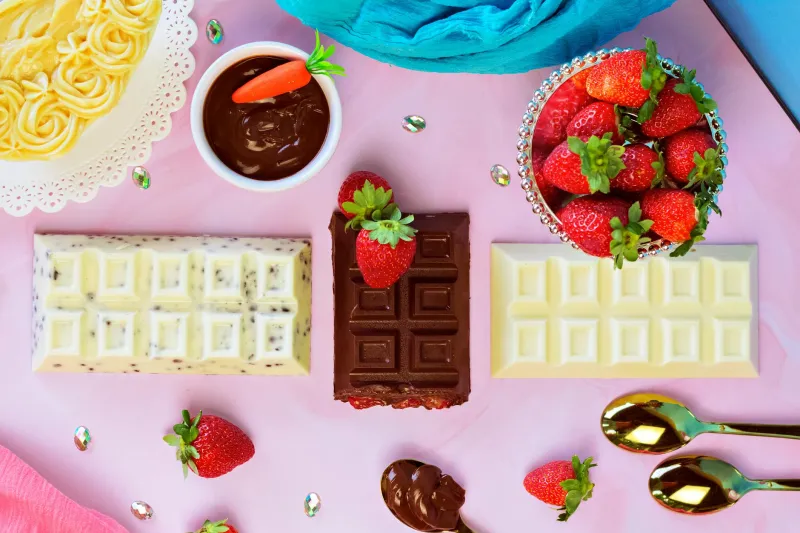
The Sticky Situation That Changed Everything
Picture this: you're at work, focused on testing military radar equipment, when you reach into your pocket and discover your afternoon snack has turned into a gooey mess. Most people would curse their luck, toss the ruined candy, and maybe file a complaint about workplace safety. Percy Spencer, a self-taught engineer at Raytheon, did something completely different—he got curious.
It was 1945, and Spencer was standing near a magnetron, the heart of radar technology that had helped win World War II. The chocolate bar in his pocket had melted into a sticky disaster, but instead of seeing it as an annoyance, Spencer saw it as a puzzle. Why had his Mr. Goodbar turned to mush when he felt perfectly fine?
From Candy to Kernels: The Great Popcorn Experiment
The next day, Spencer returned to work with a bag of popcorn kernels. He placed them near the magnetron and watched in amazement as they began popping frantically, scattered across his lab like tiny explosions. His colleagues thought he'd lost his mind, but Spencer was onto something revolutionary.
His third experiment involved an egg, which promptly exploded all over his face when exposed to the microwave radiation. While cleaning egg off his glasses, Spencer realized he'd stumbled upon an entirely new way to cook food. The same electromagnetic waves that could detect enemy aircraft could also heat meals in minutes.
The $5,000 Refrigerator-Sized Cooking Machine
Spencer's first microwave oven, called the "Radarange," was about as far from today's countertop models as a horse-drawn carriage is from a Tesla. Standing nearly six feet tall and weighing 750 pounds, this metal behemoth cost $5,000—equivalent to about $75,000 today. It required special plumbing for water cooling and was marketed exclusively to restaurants and ocean liners.
The machine looked more like a piece of industrial equipment than a kitchen appliance, which it essentially was. Early users had to learn an entirely new vocabulary of cooking, since traditional terms like "baking" and "roasting" didn't quite apply to this electromagnetic wizardry.
America's Skeptical Love Affair
Americans didn't exactly embrace the microwave with open arms. Early models sparked fears about radiation poisoning, with some people convinced that microwaved food would make them glow in the dark or develop mysterious illnesses. Consumer Reports warned against "nuked" meals, and many restaurants kept their Radaranges hidden in back kitchens to avoid frightening customers.
The breakthrough came in the 1970s when Amana, a subsidiary of Raytheon, introduced the first countertop model for under $500. Suddenly, the space-age cooking method became accessible to ordinary families, though many still approached it with the caution typically reserved for handling radioactive materials.
The Accidental Empire
Today, more than 90% of American homes contain a microwave oven, making it more common than dishwashers or garbage disposals. College students worship them as the primary tool for transforming ramen noodles into gourmet experiences. Busy parents rely on them to reheat countless meals. Office break rooms across the nation hum with their distinctive whirring sound.
All of this traces back to one man's refusal to simply throw away a melted chocolate bar. Spencer, who never graduated from high school but held 300 patents by the end of his career, couldn't have imagined that his sticky workplace accident would eventually feed millions of Americans daily.
The Sweet Legacy of Scientific Curiosity
Percy Spencer's story embodies the beautiful randomness of innovation. He wasn't trying to revolutionize cooking—he was just a guy who noticed something weird and decided to investigate rather than ignore it. His willingness to turn an embarrassing moment into a scientific experiment created an industry worth billions and fundamentally changed how Americans think about preparing food.
The next time your microwave beeps, remember that you're benefiting from what might be history's most delicious accident. Sometimes the most profound discoveries come not from years of careful planning, but from simply paying attention to life's sticky little surprises.