
The Day Democracy Got Its Wires Crossed
Picture this: you wake up one morning to discover you've been elected mayor of your hometown. The catch? You never ran for office, never filed paperwork, never even considered politics. For Harold "Hank" Morrison of Millbrook, Ohio, this wasn't a dream—it was Tuesday, November 5th, 1947.
 Photo: Millbrook, Ohio, via www.millbrookresortohio.com
The story begins with what should have been routine municipal election prep. The town's ballot printer, Jeremiah Kowalski, had been handling Millbrook's elections for over a decade without incident. But in the autumn of 1947, Kowalski was juggling his printing business with caring for his ailing wife, and somewhere between the candidate filing deadline and press time, he made a mistake that would accidentally create local political legend.
When Good Intentions Meet Bad Handwriting
The official candidate for mayor was Henry "Hap" Morrison, a local insurance salesman who'd been campaigning door-to-door for months. His handwritten filing form, submitted in September, clearly stated his intention to run for the town's highest office. What it didn't clearly state, thanks to Hap's notoriously illegible penmanship, was his actual name.
Kowalski, squinting at the smudged paperwork under his shop's dim lighting, read "Harold Morrison" instead of "Henry Morrison." In a town of 2,800 people, this distinction mattered enormously—Harold Morrison was the 67-year-old owner of Morrison's Hardware, a man known for fixing screen doors and dispensing free advice about lawn care. He had exactly zero political experience and even less political ambition.
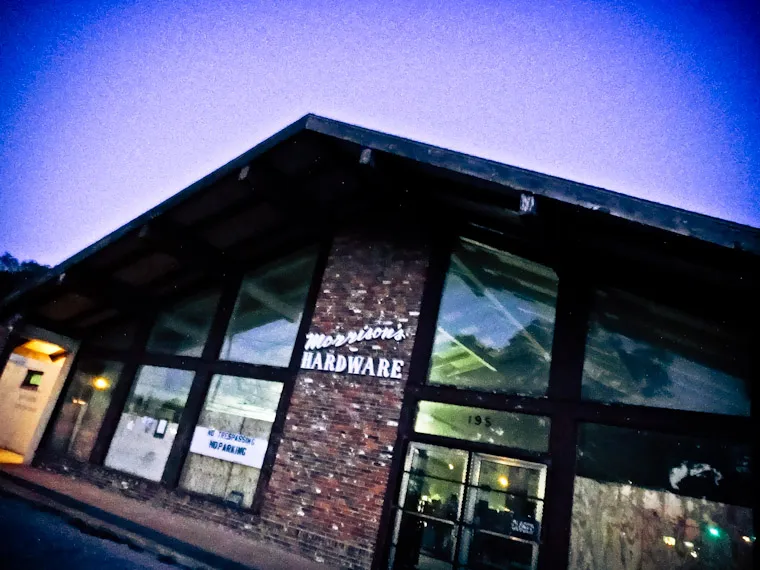 Photo: Morrison's Hardware, via www.staugustinepics.com
The Landslide Nobody Saw Coming
Election Day proceeded normally until the votes were counted. Harold Morrison—who had spent the day at his hardware store, completely unaware his name was on any ballot—won by the largest margin in Millbrook's history. He captured 847 votes out of 1,203 cast, crushing his supposed opponent, incumbent mayor William Becker, who managed only 356 votes.
The real candidate, Henry "Hap" Morrison, received exactly zero votes, despite having campaigned for two months. Even his own wife accidentally voted for Harold, assuming the ballot was correct and she'd somehow misremembered her husband's first name.
"I Think There's Been Some Mistake"
Harold Morrison learned of his electoral victory when his neighbor, Emma Kowalski (the printer's daughter), knocked on his door at 9 PM with a congratulatory casserole and the evening's vote tallies. Morrison's first words, according to local newspaper coverage, were: "I think there's been some mistake." His second words were considerably less printable.
But Millbrook's voters had spoken, and they'd spoken loudly. When the error was discovered the next morning, the town council faced a unique problem: their most popular mayoral candidate in decades was technically ineligible because he'd never filed for office. The real candidate, meanwhile, was threatening to sue everyone from the printer to the town clerk to, inexplicably, the fire department.
When Bureaucracy Becomes Democracy
Rather than call a new election, Millbrook's town attorney, Chester Hanks, devised what he called "retroactive democratic ratification." The theory was simple: if Harold Morrison agreed to serve, and the town council unanimously approved his appointment, they could treat the election as an informal referendum on his suitability for office.
The legal logic was questionable, but the political logic was bulletproof. Morrison had won by the largest margin in town history, and his victory speech—delivered impromptu from his hardware store's front porch—had already convinced half the town he was exactly what they needed.
The Accidental Politician Who Actually Delivered
Morrison's first mayoral act was to fix the squeaky door on the town hall, a problem that had annoyed visitors for six years. His second act was to organize the most efficient snow removal system in the county, treating municipal snow plowing like a large-scale hardware inventory problem.
Over his two terms (he was re-elected in 1949, this time intentionally), Morrison implemented a revolutionary system of preventive infrastructure maintenance, established the county's first municipal recycling program, and somehow managed to run budget surpluses every year while actually improving city services.
The Final Twist
Morrison served with distinction until 1951, when he decided not to seek a third term. Only on his final day in office did the state attorney general's office inform Millbrook that Morrison's entire tenure had been technically illegal—the "retroactive democratic ratification" had no basis in Ohio municipal law.
The solution? The state legislature passed emergency legislation retroactively legitimizing every decision Morrison had made as mayor, creating what legal scholars now call the "Millbrook Precedent"—the only case in American history where an entire municipal administration was legalized after the fact.
The Legacy of a Beautiful Mistake
Today, Morrison's Hardware still operates in downtown Millbrook, though Harold passed away in 1982. The store's front window displays his mayoral portrait alongside a framed copy of the misprinted ballot that started it all. Local historians estimate that Jeremiah Kowalski's typo remains the most consequential spelling error in Ohio political history.
As for Henry "Hap" Morrison, he eventually ran for town council in 1953—making sure to print his name in block letters on all filing forms. He lost.