
The Most Dangerous Package in American History
Imagine opening a wooden shipping crate expecting merchandise and instead finding a living, breathing human being. That's exactly what happened in a Philadelphia anti-slavery office on March 30, 1849, when Henry "Box" Brown emerged from what should have been his coffin.
The plan sounds like something from a fever dream: seal yourself inside a three-foot wooden box, get shipped via train and steamboat for 350 miles, and hope you don't die from suffocation, starvation, or being tossed upside down by careless baggage handlers. Yet somehow, against every law of physics and common sense, it actually worked.
A Plan Born from Desperation
Henry Brown was a slave in Richmond, Virginia, working in a tobacco factory when his wife and children were sold away from him in 1848. The separation broke something fundamental in Brown's spirit, but instead of breaking him entirely, it sparked an idea so audacious it bordered on suicidal.
 Photo: Richmond, Virginia, via housingforwardva.org
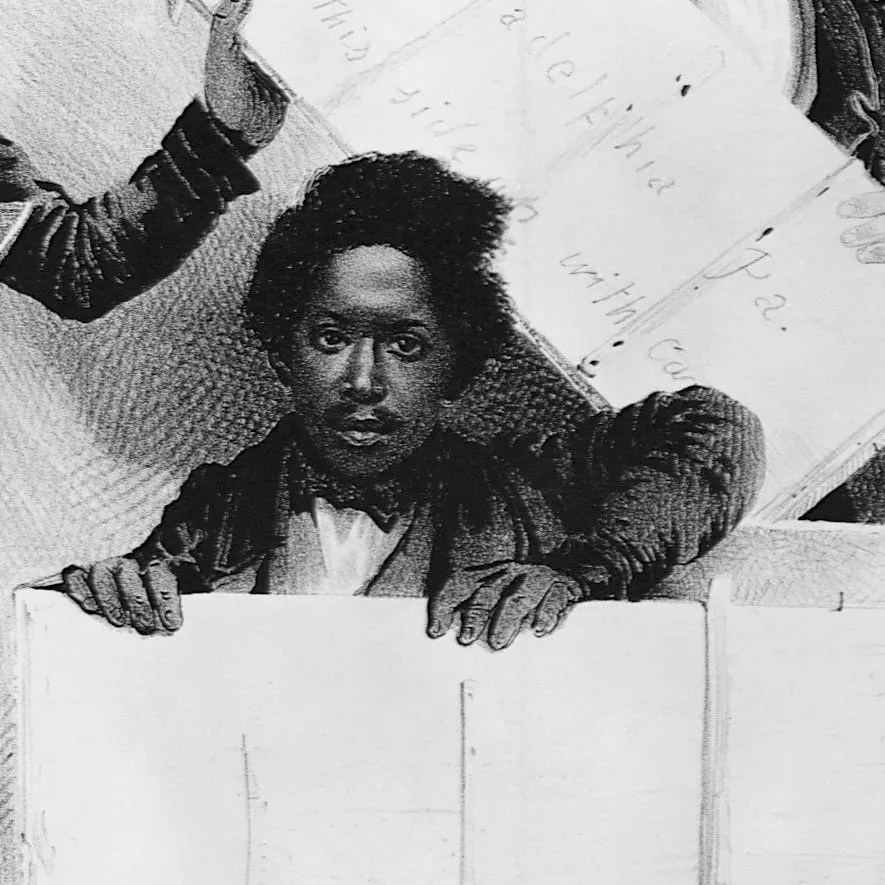 Photo: Henry Brown, via hips.hearstapps.com
Brown approached Samuel Smith, a white shoemaker and Underground Railroad conductor, with his scheme. Smith's initial reaction was probably the same as anyone hearing this plan: absolute horror. The box would measure just three feet long, two and a half feet deep, and two feet wide—barely larger than a coffin. Brown would be crammed inside for what they estimated would be a full day's journey, with only a small container of water and a few biscuits.
The physics alone should have killed him. A grown man produces about 300-500 liters of carbon dioxide per day. In a sealed wooden box, that CO2 would build up to lethal levels within hours. Add the summer heat, the stress of being literally mailed like cargo, and the very real possibility of being stored upside down or sideways, and the plan seemed less like an escape route and more like an elaborate suicide.
When Everything Goes Wrong at Once
On March 29, 1849, Brown climbed into his wooden prison. Smith nailed the lid shut, addressed the box to the Philadelphia Anti-Slavery Society, and handed it off to the Adams Express Company with a prayer and a lie about shipping "dry goods."
What followed was 27 hours of everything that could go wrong, going wrong.
First, despite clear "THIS SIDE UP" markings, railroad workers immediately flipped the box upside down. Brown spent hours with all his blood rushing to his head, fighting unconsciousness while his neck cramped and his vision blurred. When the train stopped in Washington D.C., workers thankfully flipped the box right-side up—only to flip it upside down again when loading it onto the steamboat to Philadelphia.
Then came the heat. The steamboat's cargo hold turned into an oven under the March sun. Brown later described feeling like his brain was literally cooking inside his skull. His water ran out. His biscuits crumbled to dust in the sweltering air. At one point, he was certain he was going to die and began what he thought would be his final prayers.
The most terrifying moment came when curious dock workers in Baltimore started examining the box, commenting on how unusually heavy it seemed for dry goods. Brown held his breath for what felt like an eternity, convinced they would pry open the lid and discover him. Somehow, they moved on without investigating further.
The Impossible Delivery
When the box finally arrived at the Philadelphia Anti-Slavery Society office, the men receiving it had no idea what was inside. They'd been told to expect a "shipment" but assumed it would be papers or supplies, not a human being.
The moment they pried open the lid, Henry Brown sat up, looked around at the stunned faces surrounding him, and reportedly said, "Good morning, gentlemen." Then he promptly fainted.
Miraculously, Brown had survived. Dehydrated, cramped, and barely conscious, but alive. The story spread like wildfire through abolitionist circles and newspapers. Brown had accomplished something that should have been physically impossible: he had literally mailed himself to freedom.
Fame Becomes a Curse
Brown's escape made him an instant celebrity in the abolitionist movement. He toured the North telling his story, earning the nickname "Box" Brown. He even commissioned a moving panorama—a kind of 19th-century slideshow—depicting his journey and other slavery scenes.
But fame proved to be a double-edged sword. The more Brown publicized his story, the more dangerous it became for the people who had helped him. Samuel Smith, the shoemaker who had organized the shipping, was arrested and imprisoned after Brown's story became too well-known. Other potential escapees could no longer use similar methods because authorities were now watching for suspiciously heavy boxes.
Brown's celebrity ultimately forced him to flee to England when the Fugitive Slave Act of 1850 made even free Northern states dangerous for escaped slaves. His greatest triumph—surviving the impossible journey in the box—became the very thing that made him a permanent exile.
The Physics of the Impossible
Modern experts still marvel at how Brown survived. The carbon dioxide levels alone should have killed him. The temperature extremes should have caused fatal heat stroke. The physical trauma of being bounced around for 27 hours in a cramped space should have caused blood clots or organ damage.
Yet somehow, through a combination of luck, determination, and what can only be called a miracle of human endurance, Henry Brown emerged from that box alive. His escape remains one of the most audacious and successful prison breaks in American history—except the prison was an entire economic system, and the escape route was the U.S. Postal Service.
In a country where millions were held in bondage, one man found freedom by thinking literally outside the box—or rather, inside it.