The Lab Mistake That Keeps Your Beer Cold: How a Trashed Experiment Quietly Took Over American Kitchens
Here's a question worth sitting with for a second: What do your refrigerator, your gas station coffee cup, your camping cooler, and the walls of your house probably have in common?
Polyurethane foam. Specifically, a rigid, closed-cell version of it that traps air so efficiently it changed the economics of the entire food storage industry. It's everywhere. It's in billions of products. And the man who accidentally stumbled onto it in a mid-century American laboratory never collected a meaningful cent from any of it.
That's not a metaphor. That's just what happened.
A Problem Nobody Asked Him to Solve
In the early 1940s, industrial chemists weren't exactly sitting around dreaming up better ways to keep your six-pack cold. They were trying to solve very different, very unglamorous problems — things like industrial sealing compounds, pipe coatings, and structural adhesives for manufacturing applications that had nothing to do with your kitchen.
The chemistry of polyurethanes was already loosely understood by this point. German chemist Otto Bayer had done foundational work on urethane polymer chains in the late 1930s, and American labs were scrambling to develop their own versions after World War II disrupted access to European chemical research. The goal, broadly, was to create materials that were durable, flexible, and cheap to produce at scale.
 Photo: World War II, via cdn1.epicgames.com
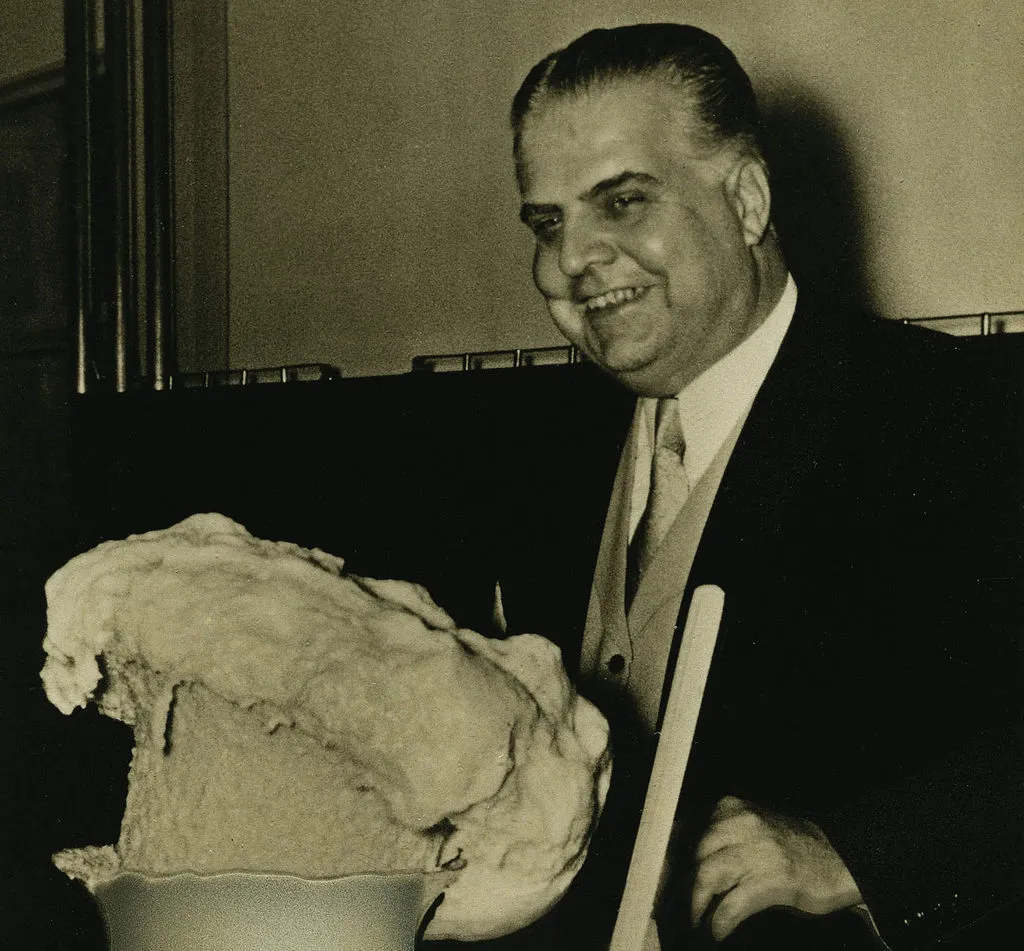 Photo: Otto Bayer, via www.lpm.cz
What nobody was specifically trying to make was foam.
The foam happened because something went wrong.
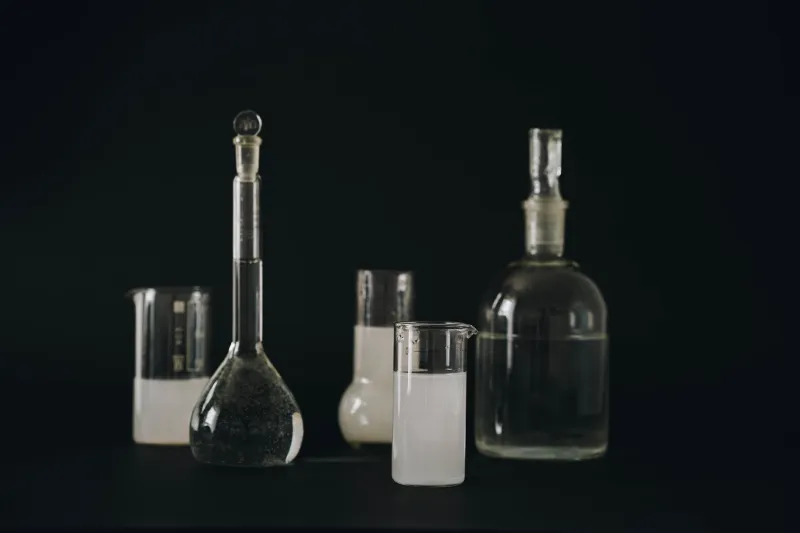
During routine experimental mixing of polyol and isocyanate compounds — the two chemical families that combine to form polyurethane — an engineer working in an American industrial lab introduced too much of a blowing agent into the reaction. The result wasn't the dense, rubbery material he was aiming for. Instead, the mixture expanded rapidly, filled the container, and hardened into a stiff, porous, lightweight solid riddled with tiny trapped air pockets.
His first instinct, by most accounts, was to consider it a failure.
Why the Trash Can Didn't Win
Here's where the story gets genuinely interesting. The engineer didn't immediately throw it out — probably because lab materials were expensive and documentation was expected. He poked at it. He noticed it was remarkably rigid for how light it was. He noticed it didn't conduct heat particularly well.
That last part was the thing.
Insulation, at the time, meant fiberglass batts, cork panels, or mineral wool — all decent materials, but all with significant drawbacks. They absorbed moisture. They compressed over time. They were bulky relative to their insulating performance. The accidental foam sitting on the lab bench didn't have those problems. Its closed-cell structure — millions of tiny sealed bubbles — meant moisture couldn't easily penetrate it, it held its shape under pressure, and its thermal resistance per inch of thickness was genuinely impressive.
The engineer filed internal notes. He told colleagues. And then, as so often happens with discoveries that don't fit the current project brief, the finding moved sideways — out of his hands and into the broader corporate apparatus.
The Quiet Takeover
By the early 1950s, rigid polyurethane foam was being quietly developed by major chemical manufacturers, most prominently by companies with the industrial infrastructure to refine and scale the process. The original accidental discovery had been absorbed, refined, patented in various specific formulations, and handed off to engineering teams who had no particular reason to credit or compensate the person who'd first noticed the foam hardening in a mislabeled beaker.
This is not a unique story in American industrial history. The mid-twentieth century was full of moments where individual discoveries were folded into corporate R&D pipelines, and the original human moment of discovery got buried under layers of institutional ownership. Patent law, particularly around processes rather than products, made it easy for companies to claim ownership of refined versions of an idea without acknowledging where the idea started.
The refrigerator industry noticed almost immediately. Appliance manufacturers had been struggling with the insulation problem for decades — early refrigerators used cork or fiberglass, which worked but added significant bulk and weight. Rigid urethane foam could be injected directly into the walls of a refrigerator cabinet, conforming perfectly to the shape of the cavity and setting hard. The result was a thinner, lighter, better-insulated appliance.
By the 1960s, it was standard. By the 1970s, it was everywhere.
The Billion-Dollar Accident
Today, polyurethane foam insulation is a genuinely massive industry. It lines commercial refrigeration units that preserve food across the entire American supply chain. It's in the walls of energy-efficient homes. It's the white material inside your foam cooler. It's the sleeve on your coffee cup. The market is worth tens of billions of dollars annually, and it traces its lineage directly to that overcooked batch of chemicals that someone almost tossed in the trash.
The engineer at the center of it — and the historical record on exactly who deserves first credit is genuinely murky, which is itself part of the problem — did not retire wealthy. In the broad pattern of mid-century industrial discovery, individual inventors rarely did unless they had the foresight, capital, and legal muscle to protect their work from the moment it happened.
Most didn't.
What makes this story stick, beyond the obvious injustice of it, is the sheer scale of the accident's impact. We're not talking about a slightly better mousetrap. We're talking about a fundamental shift in how America stores food, builds homes, and manages energy. The U.S. Department of Energy has estimated that better insulation in residential buildings alone saves Americans hundreds of billions of dollars in energy costs over time.
All of it traceable, in some meaningful way, to a chemical reaction that wasn't supposed to happen.
So next time you pull a cold beer out of a well-insulated fridge, or carry your iced coffee across a parking lot without burning your hand, take a second to appreciate the frustrated chemist who looked at his ruined experiment and, instead of throwing it away, thought: huh, that's strange.
He was right. It was.