The Paper Town That Collected Government Checks: How Nevada's Most Ambitious Hoax Lasted 40 Years
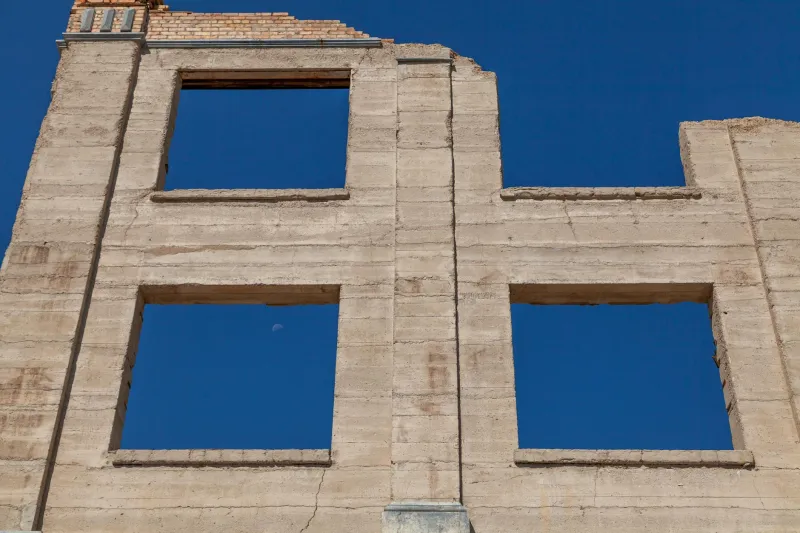
The Town That Never Was
Imagine receiving mail addressed to your hometown, seeing it marked on official government maps, and watching federal agencies send funding your way — all while knowing your "town" consists of little more than a gas station, a handful of trailers, and maybe a dozen people on a good day. Welcome to Jackpot, Nevada's lesser-known cousin: a community so determined to exist that it convinced the U.S. government it was real for nearly half a century.
This isn't a story about urban legends or folklore. This is about how a small group of Nevada entrepreneurs discovered that creating a fake town was surprisingly easy, and keeping it alive was even easier — as long as you knew which forms to file.
The Birth of a Bureaucratic Ghost
The scheme began in the 1920s when a group of land speculators realized something fascinating about how the federal government tracked communities. Back then, establishing a town required surprisingly little actual infrastructure. You needed a post office, some kind of local governance structure, and enough paperwork to convince distant bureaucrats that people actually lived there.
What these entrepreneurs discovered was that "enough people" was a remarkably flexible concept.
They established their phantom community in a remote stretch of Nevada desert, far enough from any major city that federal inspectors were unlikely to drop by unannounced. They built the bare minimum: a small post office building, a general store that operated sporadically, and a few structures that could generously be called residences.
Then came the paperwork blitz.
The Art of Administrative Theater
The founders understood that government recognition wasn't about reality — it was about documentation. They filed incorporation papers, established a municipal government (consisting mostly of themselves wearing different hats), and began the delicate dance of maintaining just enough activity to stay on official radar.
Every few years, they'd hold "town meetings" attended by the same handful of people who rotated through various official positions. Mayor Johnson would become Councilman Johnson, who would later serve as Town Clerk Johnson. The post office received mail regularly, mostly correspondence they generated themselves to maintain the appearance of an active community.
Most ingeniously, they understood that federal agencies rarely cross-referenced their data. The Census Bureau counted residents based on self-reported information. The Postal Service maintained the post office because someone was collecting the mail. The Department of the Interior included them on maps because they appeared in postal records.
Each agency assumed the others had verified the town's legitimacy.
The Government Gravy Train
By the 1940s, their fake town had evolved into something more profitable than simple land speculation. Federal programs designed to support small rural communities began sending money their way. Rural development grants, infrastructure funds, and various New Deal programs all trickled down to their tiny "community."
The beauty of the system was that most federal aid was distributed based on population and need, both of which were largely self-reported. A town claiming 50 residents in financial distress could qualify for the same programs as genuinely struggling communities — and unlike real towns, phantom towns had no actual expenses.
The money went toward "improvements" that were carefully documented but minimally implemented. A road improvement grant might result in grading a dirt path. Funds for public facilities could build a structure that served multiple purposes on paper but remained essentially empty.
The Cracks Begin to Show
For decades, the scheme worked beautifully. The town appeared on Nevada state maps, received federal recognition, and even had its own ZIP code. Local newspapers occasionally mentioned it in regional roundups, usually copying information from government sources that had copied information from previous government sources.
The problems began in the 1960s when improved communication and transportation made remote areas less remote. Federal agencies started requiring more detailed reporting, and the rise of computer databases meant information could be cross-referenced more easily.
More troubling for the town's founders was the increasing sophistication of federal auditing. Programs that had once distributed money based on simple applications now required site visits, detailed accounting, and proof of actual residents.
The House of Cards Collapses
The end came not through dramatic investigation but through mundane bureaucracy. In 1967, a routine postal inspection revealed that the town's post office was receiving almost no mail except government correspondence. A follow-up census survey found no verifiable permanent residents.
When investigators finally visited in person, they discovered a gas station, a few abandoned buildings, and one very nervous caretaker who couldn't explain where everyone had gone.
The federal government's response was characteristically bureaucratic: they simply stopped recognizing the town. No criminal charges were filed against the founders, most of whom had died or moved away by then. The post office was closed, the ZIP code was retired, and the town quietly disappeared from official maps.
The Legacy of Paper Towns
What makes this story remarkable isn't just the audacity of the original scheme, but how easily it succeeded for so long. In an era before computers, satellite imagery, and instant communication, the federal government relied heavily on self-reporting and assumed that other agencies were doing their due diligence.
The phantom town of Nevada represents a unique moment in American history when the country was large enough and bureaucratic systems were simple enough that an entire community could exist purely on paper. It's a testament to both American entrepreneurial creativity and the sometimes surreal inefficiency of government bureaucracy.
Today, such a scheme would be nearly impossible. Satellite imagery, digital databases, and improved inter-agency communication would expose a fake town within months. But for forty years, a handful of determined Nevadans proved that sometimes the most unbelievable truth is that nobody was checking whether the truth was actually true.