The Memorial Day Cleanup That Never Ended
Imagine planning a simple community cleanup for Memorial Day and accidentally creating a disaster that's still ongoing 62 years later. That's exactly what happened in Centralia, Pennsylvania, where what should have been a routine trash burning turned into one of the most persistent environmental disasters in American history—and somehow, one of its most unlikely tourist attractions.
Centralia isn't just a town that caught fire and burned down. It's a town that caught fire and simply never stopped burning. The underground coal seam beneath the borough has been smoldering continuously since 1962, creating a real-life version of hell that tourists now flock to see.
When Spring Cleaning Goes Catastrophically Wrong
On May 27, 1962, Centralia's volunteer firefighters were tasked with burning trash at the town dump to clean things up before Memorial Day. Standard procedure, nothing fancy—just light some garbage on fire and let it burn itself out. Except this particular dump happened to be located in an abandoned strip mine pit, right next to an exposed coal seam.
The fire spread from the trash into the coal, and that's when everything went sideways. Coal seam fires are notoriously difficult to extinguish because they burn underground, where they're protected from rain and firefighting efforts. The fire department tried to put it out, but the flames had already burrowed into the vast network of coal mines that honeycomb the area beneath Centralia.
What started as a small municipal cleanup became an unstoppable underground inferno that would eventually consume 3,700 acres and cost tens of millions of dollars in failed extinguishing attempts.
The Slow-Motion Evacuation Nobody Wanted
For the first few years, Centralia residents thought the fire would eventually burn itself out or be successfully extinguished. The federal government spent $7 million trying to stop it. They poured water, sand, and fly ash into the burning mines. They dug trenches to contain the fire. Nothing worked.
By the 1980s, the situation had become genuinely dangerous. Carbon monoxide leaked into homes. The ground temperature in some areas reached 1,000 degrees Fahrenheit. Sinkholes opened up, threatening to swallow houses whole. In 1981, 12-year-old Todd Domboski nearly fell into a sinkhole that suddenly opened beneath his feet—a 150-foot-deep pit with carbon monoxide levels that would have killed him instantly.
That incident finally prompted serious action. In 1984, Congress allocated $42 million to relocate Centralia's residents. Most took the buyout and left, but here's the truly strange part: not everyone wanted to go.
The Holdouts Who Refused to Leave Hell
A small group of residents simply refused to abandon their homes, even as smoke vented from cracks in their yards and the ground beneath their feet literally burned. These holdouts fought the government in court, arguing that their section of town wasn't directly threatened by the fire and that they had a right to stay in their homes.
The legal battle lasted for decades. The federal government condemned all the properties and tried to force the remaining residents out. The residents sued back. The fire kept burning through it all, completely indifferent to the paperwork.
As late as 2013, there were still seven residents living in Centralia, maintaining their homes above an active underground fire. Today, estimates suggest fewer than five people remain, but the exact number is unclear because some residents prefer not to publicize their presence.
Welcome to America's Most Apocalyptic Tourist Destination
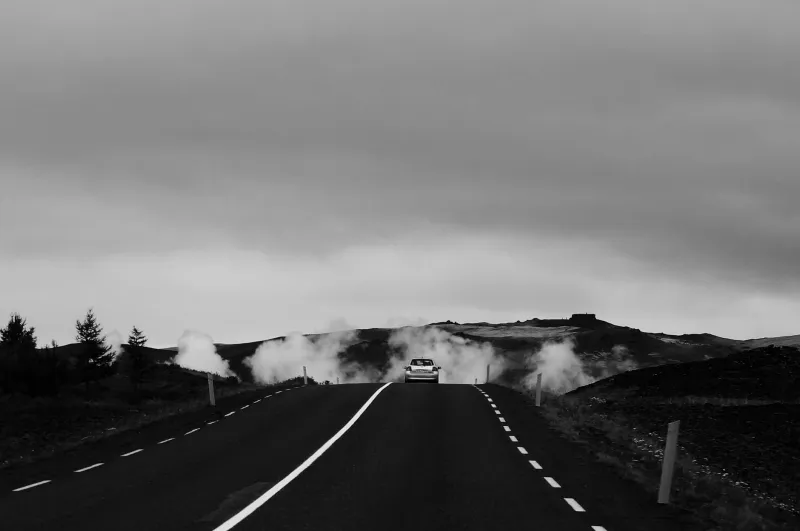
Here's where the story gets truly surreal: Centralia has become a legitimate tourist attraction. Thousands of people visit every year to see what a real-life ghost town looks like. The Pennsylvania Department of Transportation has given up trying to maintain Route 61 through the area—the highway is permanently closed, cracked and buckled from the underground heat, with grass growing through the asphalt.
Visitors come to see the famous "Graffiti Highway"—the abandoned stretch of Route 61 where people have spray-painted messages, declarations of love, and artwork on the broken asphalt. They take selfies with the steam venting from cracks in the ground. They visit the few remaining structures and the cemetery that somehow survived the exodus.
The town that inspired the setting for the horror movie "Silent Hill" has become a pilgrimage site for urban explorers, horror fans, and people fascinated by abandoned places. There's something deeply American about turning a 60-year-old environmental disaster into a roadside attraction.
The Fire That Outlasted Everything
Centrallia remains officially incorporated as a borough, despite having virtually no residents and being mostly uninhabitable. The post office closed in 2002. The last business shut down years ago. But technically, Centralia, Pennsylvania still exists as a legal entity—a municipality where the ground has been on fire since the Kennedy administration.
Experts estimate the coal seam fire could continue burning for another 250 years. The underground coal reserves are vast enough to fuel the fire well into the 23rd century, long after everyone who remembers pre-fire Centralia is gone.
The fire has outlasted the Cold War, the internet revolution, and multiple generations of residents. It's consumed an estimated 25 million tons of coal and shows no signs of slowing down. Satellite images still show heat signatures from the burning areas.
The Cleanup That Became a Monument
What makes Centralia's story so perfectly absurd is that it began with people trying to clean up their community for a holiday celebration. Memorial Day 1962 was supposed to be a fresh start, a cleaned-up town ready for summer. Instead, it marked the beginning of the end for one of Pennsylvania's oldest continuously inhabited communities.
Today, Centralia serves as an accidental monument to the unintended consequences of routine decisions. A simple trash fire became a half-century environmental disaster. A thriving community became a tourist destination for people who want to see what apocalypse looks like in small-town America.
The town that accidentally set itself on fire and couldn't figure out how to stop burning has achieved a kind of immortality—not the kind anyone would choose, but immortality nonetheless. Centralia will likely be remembered long after most other Pennsylvania towns are forgotten, simply because it's the place that's been burning since 1962 and might still be burning in 2262.
Sometimes the most unbelievable stories are the ones that start with someone just trying to take out the trash.