The Assignment That Changed Everything
Mary Catherine Williams never intended to rewrite American history when she assigned her seventh-grade class in Lincoln, Nebraska to compose patriotic poetry on a dreary Tuesday afternoon in March 1924. She certainly didn't expect that her own hastily written example—dashed off in fifteen minutes between lunch and recess—would end up debated on the floor of the United States Senate.
 Photo: United States Senate, via c8.alamy.com
 Photo: Lincoln, Nebraska, via img.freepik.com
Yet that's exactly what happened when Williams' poem "America the Brave" caught the attention of a visiting school board member, who happened to be married to a state legislator, who happened to mention it to a congressman during a dinner party in Washington. Within six months, what began as a classroom exercise had become the centerpiece of a national movement to replace "The Star-Spangled Banner" with something Americans could actually sing.
The Problem with Our National Anthem
By the 1920s, "The Star-Spangled Banner" had been America's unofficial national anthem for over a century, but it had never been officially adopted by Congress. More importantly, almost nobody could sing it properly. The melody, borrowed from an old English drinking song, required a vocal range of nearly two octaves—a feat that challenged even professional singers.
Congressman James Morton of Nebraska had been pushing for official anthem legislation since 1918, frustrated by the awkward silences at public events when audiences gamely attempted the impossible high notes. When Morton heard about Williams' poem through his political networks, he saw an opportunity to solve two problems at once: give America an official anthem and replace the unsingable one with something written by an actual American.
The Poem That Captured a Nation
Williams' creation was everything "The Star-Spangled Banner" wasn't: simple, melodic, and written in a comfortable vocal range. "America the Brave" celebrated American ideals without referencing specific battles, used everyday language instead of archaic phrases, and could be sung by anyone who could carry a tune.
The poem began: "From sea to shining sea we stand, / United, free, and brave, / A beacon bright in freedom's fight, / The land that Lincoln gave." Critics later dismissed these lines as simplistic, but that simplicity was precisely what made the song appealing to ordinary Americans who had struggled with Francis Scott Key's elaborate imagery for generations.
The Political Machine Takes Notice
Morton introduced Williams' poem to Congress in September 1924, backed by a surprising coalition of educators, veterans' groups, and music publishers who saw commercial potential in a more accessible national anthem. The timing seemed perfect: America was enjoying post-war prosperity, patriotic sentiment was high, and the Republican administration was looking for uncontroversial ways to demonstrate American values.
The House of Representatives passed Morton's resolution by a comfortable margin in December 1924, sending the measure to the Senate with momentum that surprised even its supporters. Newspapers across the country picked up the story, and "America the Brave" began appearing in school songbooks and community gatherings before the Senate had even scheduled hearings.
The Unexpected Opposition
What nobody anticipated was the fierce resistance from established music publishers who held copyrights to arrangements of "The Star-Spangled Banner." While Key's original poem was in the public domain, dozens of orchestral and choral arrangements generated substantial royalties for publishing houses that had invested heavily in patriotic music catalogs.
The American Legion, initially neutral on the anthem question, was pressured by members who viewed any change as disrespectful to veterans who had served under the traditional song. Veterans' organizations that had supported Morton's effort began withdrawing their endorsements as local chapters complained about abandoning military tradition.
The Senate Showdown
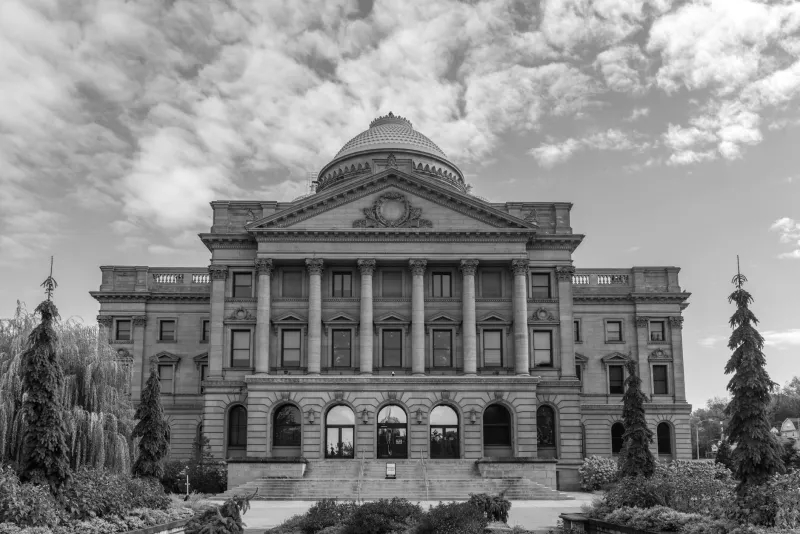
The Senate debate in February 1925 revealed deep divisions about American identity and tradition. Supporters of Williams' poem argued that a democratic nation deserved an anthem its citizens could actually sing, while opponents insisted that "The Star-Spangled Banner" represented historical continuity that shouldn't be sacrificed for convenience.
Senator Henry Cabot Lodge of Massachusetts delivered the most memorable opposition speech, arguing that "the difficulty of our national anthem reflects the difficulty of our national achievement—both require effort, practice, and dedication to master." Supporters countered that patriotism shouldn't require vocal training.
The Vote That Changed Nothing
When the final vote was tallied on February 18, 1925, Morton's resolution failed by exactly three votes: 47 in favor, 50 opposed. Williams' poem, which had come closer to replacing "The Star-Spangled Banner" than any other serious proposal in American history, disappeared from national consideration almost immediately.
The political coalition that had supported the change dissolved within weeks. Music publishers redirected their lobbying efforts toward protecting existing copyrights, veterans' groups returned to other issues, and Morton lost his reelection bid later that year to a candidate who made his opposition to "musical experimentation" a campaign theme.
The Teacher's Legacy
Mary Catherine Williams returned to her classroom in Lincoln, where she continued teaching for another thirty years without ever again mentioning her brief moment of national fame. Her poem survived in a few school songbooks through the 1930s, but "America the Brave" gradually faded from memory as "The Star-Spangled Banner" finally received official recognition from Congress in 1931.
Williams kept a scrapbook of newspaper clippings about the anthem controversy, which her family donated to the Nebraska State Historical Society after her death in 1958. Researchers who examined the collection noted that she had written "Almost!" in pencil across the front page of the scrapbook—the only comment she ever made about how close her fifteen-minute classroom assignment had come to rewriting the soundtrack of American patriotism.
The Song That Might Have Been
Today, "America the Brave" exists only in historical archives and the occasional academic paper about American music history. But Williams' near-miss with immortality raises fascinating questions about how national symbols are created and preserved. Her simple, singable poem might have spared generations of Americans the embarrassment of mumbling through impossible high notes—if not for three Senate votes and the complex politics of patriotic publishing.
The story serves as a reminder that even our most seemingly permanent national traditions are more fragile and arbitrary than we imagine, shaped as much by political timing and commercial interests as by artistic merit or historical significance.