
The Fence That Broke the Legal System
Some neighbor disputes end with a handshake. Others end with small claims court. And then there's Pritchard v. Henley, the Tennessee lawsuit that refused to end for 25 years, creating what legal scholars now consider the strongest accidental argument for tort reform in American history.
It started simply enough: a wooden fence fell down between two properties in rural Hawkins County, Tennessee, during a storm in March 1971. What should have been a $50 repair job instead became a quarter-century legal marathon that would outlast the Cold War, the invention of the personal computer, and two complete renovations of the courthouse where it was filed.
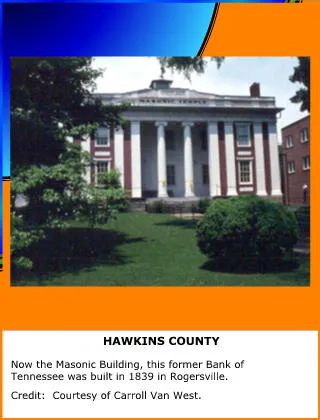 Photo: Hawkins County, Tennessee, via tennesseeencyclopedia.net
When Good Fences Make Terrible Neighbors
Earl Pritchard owned a small dairy farm on Possum Creek Road. His neighbor, Vernon Henley, raised tobacco and kept a few head of cattle. Between their properties stood a split-rail fence that had been there since before either man was born, installed by previous owners whose names nobody could quite remember.
When a spring thunderstorm knocked down a 40-foot section of this fence in 1971, both men assumed the other was responsible for repairs. Pritchard argued that since Henley's cattle used the fence to contain their grazing, Henley should fix it. Henley countered that since the fence was clearly on Pritchard's side of the property line, Pritchard was liable for maintenance.
After six months of increasingly heated discussions, Pritchard filed a civil lawsuit seeking $127 in damages—the cost of fence materials and one day's labor. Henley responded with a counter-suit claiming $200 in damages from cattle that had wandered onto his neighbor's property through the gap.
The Legal System Meets Murphy's Law
What happened next reads like a masterclass in how everything that can go wrong will go wrong, usually at the worst possible moment.
The case was assigned to Judge William Carpenter, who scheduled the first hearing for January 1972. Three days before the trial, Judge Carpenter suffered a heart attack and was hospitalized for six weeks. The case was transferred to Judge Harold McGrath, who promptly scheduled a new trial date for April.
In March, the Hawkins County Courthouse's heating system exploded (literally—a boiler malfunction that made regional headlines), forcing all court proceedings to relocate to a temporary facility in the basement of the county library. The April trial was postponed indefinitely while county officials figured out how to conduct jury selection in a space normally reserved for children's story time.
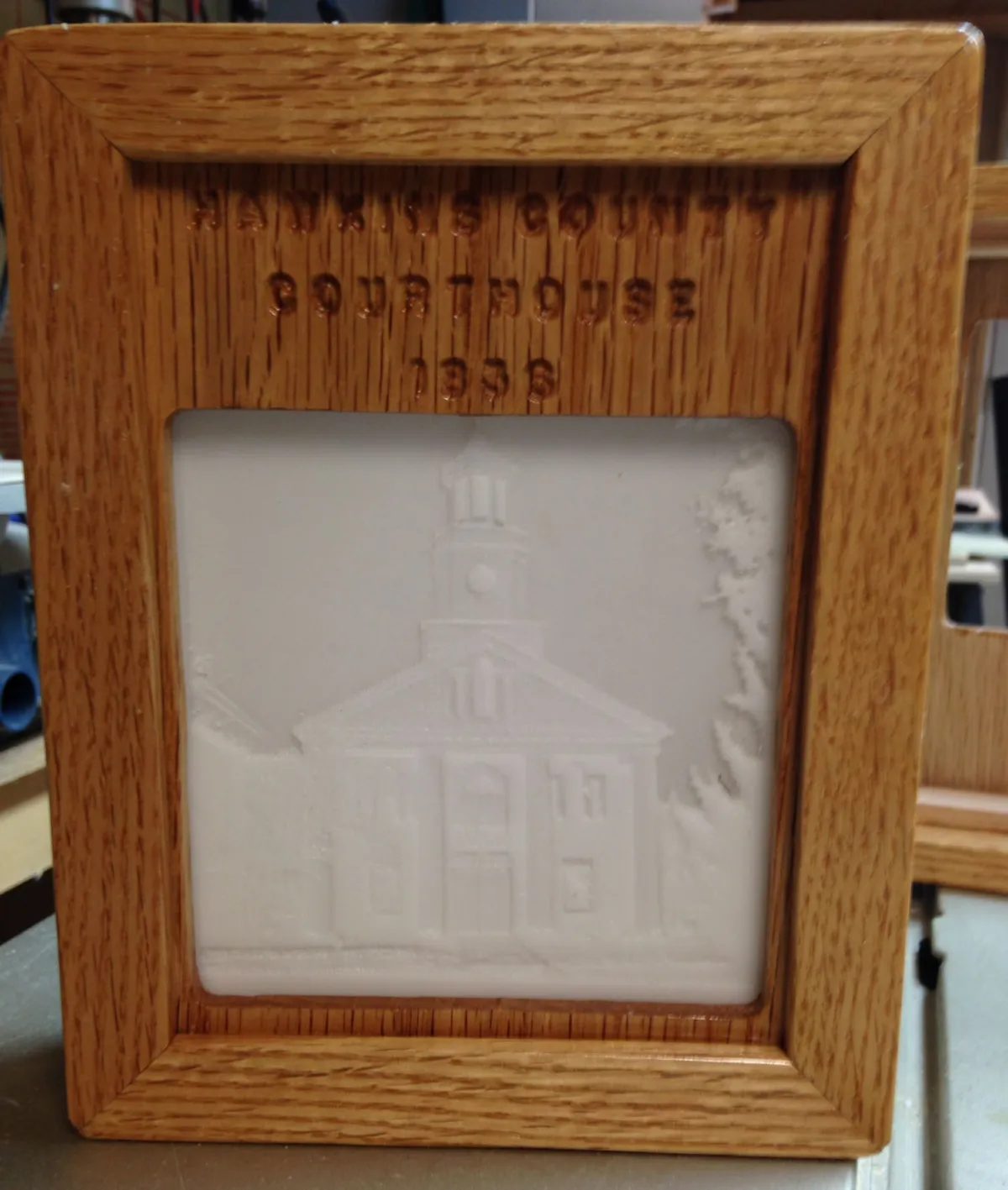 Photo: Hawkins County Courthouse, via lithophanelights.com
The Jury That Time Forgot
When the trial finally began in September 1972, twelve citizens of Hawkins County were selected for what everyone assumed would be a one-day proceeding. The jury included farmers, shop owners, a retired teacher, and Ethel Mae Kowalski, a 73-year-old grandmother who would later become the case's most dedicated participant.
 Photo: Ethel Mae Kowalski, via www.morganmessenger.com
The trial itself lasted exactly four hours. Both sides presented their evidence (photographs of the fallen fence, receipts for materials, testimony about cattle wandering), and the case was submitted to the jury for deliberation. Then Judge McGrath suffered what court records diplomatically describe as "a judicial emergency"—he was arrested for public intoxication in the courthouse parking lot and suspended pending investigation.
The Case That Wouldn't Die
With no judge available to receive the verdict, the jury was dismissed "temporarily" and told to return when a replacement judge could be assigned. This temporary dismissal lasted three years.
Judge McGrath was eventually cleared of charges and returned to the bench in 1975, but by then he'd forgotten about Pritchard v. Henley entirely. The case file had been misfiled during the courthouse renovation (the building had been rebuilt after the boiler explosion), and nobody could locate the original jury pool records.
Rather than start over, court officials decided to track down the original twelve jurors and reconvene them. This proved surprisingly difficult—two jurors had moved out of state, one had died, and Ethel Mae Kowalski had forgotten she'd ever been selected for jury duty in the first place.
The Persistence of Bureaucracy
What kept Pritchard v. Henley alive for the next two decades wasn't legal necessity—it was bureaucratic inertia. Every time a new court clerk took office, they'd discover the case file and assume it needed attention. Every few years, someone would schedule a new trial date, only to discover that key participants were unavailable, evidence was missing, or the courthouse was undergoing renovation again.
The case survived the 1978 courthouse fire (the rebuilt building's third iteration), Judge McGrath's retirement in 1981, and the death of plaintiff Earl Pritchard in 1984. Pritchard's estate continued the lawsuit, apparently because nobody could figure out how to officially drop it.
The Juror Who Never Gave Up
Ethel Mae Kowalski, the retired teacher, became obsessed with seeing the case through to completion. She kept detailed records of every postponement, every scheduling conflict, and every bureaucratic snafu. Her personal files, donated to the Tennessee State Archives after her death in 1993, provide the most complete record of the case's bizarre progression.
Kowalski attended every scheduled court date for 21 years, even after other original jurors had died, moved away, or been declared mentally incompetent. Court records show she was technically "on call" for jury duty longer than some federal judges served on the bench.
The End of an Error
Pritchard v. Henley was finally dismissed in 1996, not because it was resolved, but because Tennessee implemented new case management software that couldn't accommodate files older than 20 years. Rather than manually enter a quarter-century of court records, officials simply declared the case "administratively closed."
By then, both original litigants were dead, the fence in question had rotted away completely, and both properties had been sold to developers who built a shopping center on the disputed land. The $327 in combined damages sought by both parties had been exceeded by court costs sometime around 1987.
The Accidental Argument for Legal Reform
Law schools now use Pritchard v. Henley as a case study in how civil litigation can spiral out of control. The case appears in textbooks on tort reform, judicial administration, and legal ethics—always as an example of what not to do.
Tennessee's current case management rules, implemented in 1997, include provisions specifically designed to prevent another Pritchard v. Henley situation. Cases that remain active for more than five years without progress must be reviewed annually by senior judges, and any case older than ten years can be dismissed automatically unless all parties actively request continuation.
The Fence That Changed Everything
Today, a Walmart Supercenter sits where Earl Pritchard and Vernon Henley once argued over fence repairs. The store's parking lot covers the exact spot where the disputed fence once stood, though shoppers hurrying in for groceries have no idea they're walking over the site of Tennessee's most persistent legal dispute.
Ethel Mae Kowalski's dedication to jury service is commemorated with a plaque in the current Hawkins County Courthouse, though it doesn't mention that her 21-year commitment was to a case about a $50 fence repair. Sometimes the most important legal precedents come from the most mundane disputes—especially when those disputes refuse to stay mundane.