One Bad Map, Five Hundred Miles of Wrong: The Geography Mistake America Never Fixed
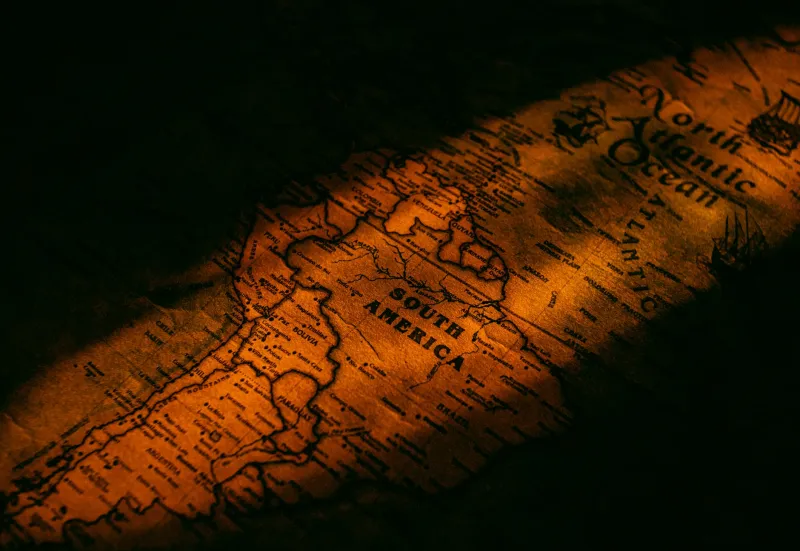
Here is something quietly unsettling about the American landscape: a meaningful chunk of it is named wrong. Not poetically wrong, not controversially wrong — just factually, cartographically, somebody-made-an-error wrong. And the reason those names are still there, still printed on maps, still embedded in county records and federal surveys and state legislation, is not that anyone decided they were correct. It's that correcting them was always someone else's problem, and that someone else never came.
The story of how this happened reaches back to the era when European and American cartographers were doing their best to map a continent they understood incompletely, working from explorer accounts that were sometimes brilliant and sometimes spectacularly mistaken.
The Art of Mapping Things You Haven't Seen
Eighteenth-century cartography was as much an act of inference as observation. Explorers returned from the interior with rough notes, estimated distances, and descriptions of landmarks that could be maddeningly vague. A mapmaker sitting in Philadelphia or London would take these accounts, cross-reference them against whatever other sources existed, and attempt to produce something coherent — knowing full well that large portions of the resulting map were educated guesses dressed up in confident linework.
River systems were especially tricky. Rivers were the highways of the continent, and getting their courses right mattered enormously for navigation, trade, and the legal description of territorial boundaries. But rivers branch, merge, and change course in ways that are difficult to reconstruct from verbal descriptions. Two explorers describing the same watershed from different entry points could produce accounts that seemed to describe completely different geography.
This is the environment in which the mistake was made.
The Junction That Wasn't Where Anyone Thought
The specific error — and American cartographic history contains several candidates that fit this pattern — involved the misidentification of a river confluence in the interior of the continent. A cartographer, working from explorer accounts and earlier maps, placed a junction between two waterways at the wrong location, then assigned a territorial name based on that incorrect placement.
The name was meant to describe a specific geographic reality: a region defined by a particular watershed, a drainage basin, a natural boundary. But because the junction was drawn in the wrong place, the name ended up attached to a region that didn't correspond to the actual geography at all. It was, in essence, a label peeled off one container and stuck onto a different one.
Other cartographers noticed. The correction appeared in scholarly correspondence, in competing maps, in the annotations of surveyors who actually walked the ground and found that the rivers didn't behave the way the original map claimed. The error was documented. It was discussed. And then, gradually, it was ignored — because by the time the correction was widely understood, the wrong name had already been copied onto too many other documents to easily walk back.
How a Mistake Becomes Permanent
This is the mechanism by which cartographic errors achieve immortality, and it is deeply, almost comically bureaucratic.
Once a name appears on an official map, it gets copied into land grants. Land grants reference it in legal descriptions. Legal descriptions get cited in court cases. Court cases establish precedents. Surveyors use the established name when they run new boundary lines. The new boundary lines get recorded in county deed books. The county deed books are referenced in state legislation. The state legislation is cited in federal surveys.
At each step, the name becomes slightly more entrenched, slightly more expensive to correct, and slightly more likely to create chaos if anyone tries to change it. The original error is by this point buried under twenty layers of legitimate legal documentation, all of which are technically correct given the name they inherited — and all of which would need to be revisited if the name were ever revised.
Federal officials who became aware of these inherited naming errors in the nineteenth century faced a straightforward calculation: the cost and disruption of correction was enormous, the practical benefit was minimal, and the political reward for undertaking the project was essentially zero. The mistakes stayed.
The Living Fossil of American Geography
What makes this story genuinely strange is how thoroughly these errors became reality through repetition. Names that were cartographically wrong in 1750 were legally correct by 1850, because law doesn't care about original intent — it cares about established usage. A place name that appears in enough official documents long enough eventually becomes the actual name of the place, regardless of what it was supposed to describe.
This is not a small or obscure phenomenon. Historians and geographers who have studied early American cartography have documented dozens of cases where names, boundaries, and geographic designations were established through error and then preserved through inertia. Some of these errors affected the placement of state boundaries. Others influenced the names of counties, rivers, and townships that are still in use today.
The United States Board on Geographic Names, established in 1890 specifically to bring order to this kind of chaos, has spent well over a century adjudicating disputes about place names — many of which trace back to exactly this kind of inherited cartographic mistake. The Board has the authority to standardize names, but it cannot simply erase names that are embedded in legal documents, property records, and state constitutions.
 Photo: United States Board on Geographic Names, via blogger.googleusercontent.com
The Map Is Not the Territory — Except When It Is
There's a philosophical concept, popularized by the linguist Alfred Korzybski, that "the map is not the territory" — meaning that our representations of reality are not the same as reality itself. American geography offers a remarkable counterexample.
 Photo: Alfred Korzybski, via image4.slideserve.com
For the people who live in places named by cartographic error, the map became the territory. The wrong name was written down, copied, legislated, and surveyed into existence so many times that it created its own reality. The rivers are still in the wrong place on the original map. The names are still wrong by the original logic. But the names are real — legally, officially, permanently real — and they will almost certainly outlast everyone who knows the story of how they got there.
Somewhere on the map of America, right now, there are places named after geography that doesn't exist the way anyone originally described it. They have zip codes. People live there. And it all started with one cartographer who made a reasonable mistake on a Tuesday afternoon in the 1700s and never had to answer for it.