When a Furry Weather Prophet Became Pennsylvania's Most Protected Citizen

The Birth of America's Strangest Civic Institution
Most towns protect their mayors, their monuments, and their municipal buildings. Punxsutawney, Pennsylvania protects a groundhog.
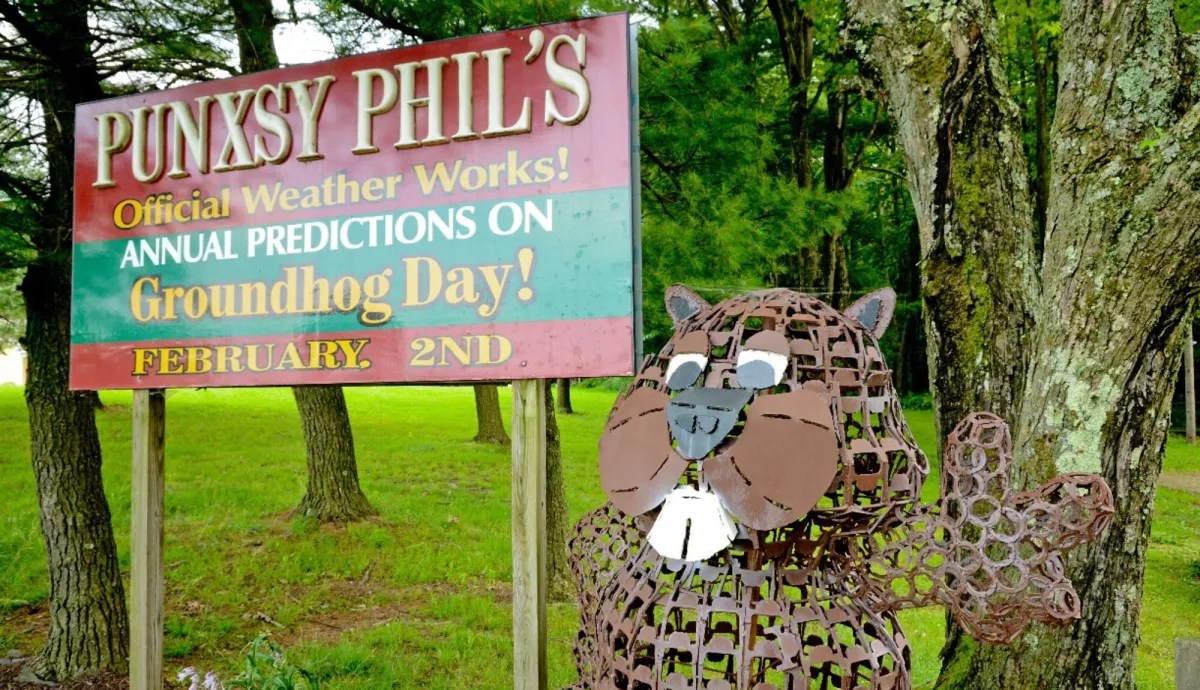 Photo: Punxsutawney, Pennsylvania, via mediaim.expedia.com
It sounds absurd until you realize that Punxsutawney Phil generates more annual revenue for this small Pennsylvania town than most Fortune 500 companies produce for their headquarters cities. What began in 1887 as a handful of German immigrants celebrating Candlemas—a Christian holiday involving candles and weather predictions—has morphed into America's most legally defended meteorological tradition.
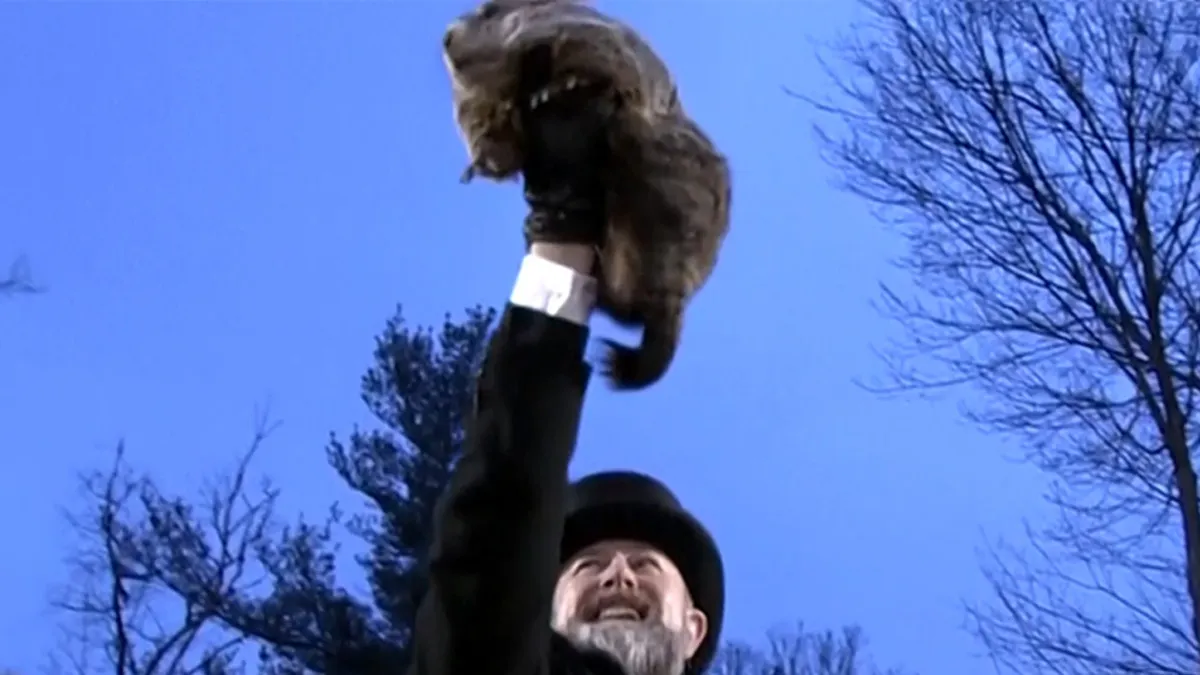 Photo: Punxsutawney Phil, via imagez.tmz.com
The Punxsutawney Groundhog Club didn't set out to create a constitutional crisis. They just wanted an excuse to drink whiskey in February and poke fun at the weather. But somewhere between 1887 and today, their boozy winter celebration became so economically vital that city officials began treating Phil's predictions like protected speech under the First Amendment.
When Weather Forecasting Becomes Municipal Law
The legal machinery protecting Phil began innocuously enough. In the 1920s, the town council passed a resolution declaring February 2nd an official municipal holiday. Reasonable enough—lots of towns have quirky local celebrations.
But by the 1950s, things got weird. The Groundhog Club convinced the mayor to issue annual proclamations recognizing Phil as the "only true weather forecasting groundhog." Not the best. Not the most accurate. The only legitimate one.
This wasn't just small-town boosterism. These proclamations carried the full weight of municipal authority. When a rival groundhog named General Beauregard Lee emerged in Georgia during the 1980s, Punxsutawney's city attorney actually sent cease-and-desist letters to Georgia officials, arguing that recognizing any other groundhog's predictions constituted false advertising under Pennsylvania consumer protection laws.
The letters were politely ignored, but they established a precedent: Punxsutawney would use every legal tool available to defend Phil's monopoly on rodent-based weather forecasting.
The 1986 Free Speech Incident
Things reached peak absurdity in 1986 when a local newspaper columnist wrote a satirical piece suggesting that Phil's predictions were "statistically meaningless" and "a waste of taxpayer resources." The Groundhog Club's response was swift and legally creative.
They convinced the city council to pass Resolution 86-04, which classified Phil's annual prediction as "protected municipal speech" under the same legal framework that shields city council meetings and mayoral addresses from defamation lawsuits. The resolution didn't explicitly threaten the columnist, but it strongly implied that criticizing Phil's accuracy could constitute interference with official city business.
The Pennsylvania ACLU called it "the most creative abuse of municipal authority they'd ever encountered." The resolution was quietly rescinded three months later, but not before establishing Punxsutawney as the only American city to formally classify animal behavior as government speech.
The Economics of Groundhog Protection
Why go to such lengths to protect a rodent's reputation? Follow the money.
Punxsutawney Phil generates approximately $7 million annually for the local economy. That's more than the entire municipal budget for most towns Punxsutawney's size. Hotels book solid for months in advance. Restaurants hire extra staff. Local merchants sell thousands of Phil-themed souvenirs.
More importantly, the town holds exclusive trademark rights to Phil's name and image—rights they've defended aggressively in federal court. When a Wisconsin cheese company tried to use Phil's likeness in a 1990s advertising campaign without permission, Punxsutawney sued for trademark infringement and won a $50,000 settlement.
The legal strategy worked so well that other towns began copying it. Buckeye Chuck in Ohio, Balzac Billy in Canada, and Staten Island Chuck in New York all operate under similar municipal protections, though none quite match Punxsutawney's legal creativity.
The Supreme Court Almost Got Involved
In 1993, the whole system nearly collapsed when a federal judge in Pittsburgh ruled that municipal protection of Phil's predictions violated the Establishment Clause of the First Amendment. The judge argued that government endorsement of weather forecasting based on animal behavior constituted an establishment of religion, since the practice originated from Christian holiday traditions.
Punxsutawney's legal team appealed immediately, arguing that Phil's predictions were secular entertainment, not religious practice. They pointed out that Las Vegas casinos offered betting odds on Phil's predictions, which surely proved the whole thing was commercial rather than spiritual.
The case made it all the way to the Third Circuit Court of Appeals before being dismissed on a technicality—the original plaintiff had moved to Florida and could no longer demonstrate standing to sue a Pennsylvania municipality.
Why America Keeps Believing
The strangest part isn't that Punxsutawney protects Phil with the full force of municipal law. The strangest part is that it works.
Phil's accuracy rate hovers around 40 percent—worse than flipping a coin—yet millions of Americans tune in every February 2nd to hear his prediction. Weather forecasters with decades of training and satellite data can't command that kind of audience loyalty.
Psychologists suggest that Phil's appeal lies precisely in his legal protection. Americans trust institutions that take themselves seriously, even when those institutions involve talking to groundhogs. The elaborate municipal machinery surrounding Phil signals importance, and importance suggests accuracy.
It's the same psychological principle that makes people trust expensive wine over cheap wine, even when they can't tell the difference in blind tastings. Phil's predictions feel authoritative because Punxsutawney treats them as authoritative.
The Legacy of Legally Protected Weather Forecasting
Today, Punxsutawney Phil operates under more legal protections than most elected officials. His predictions are shielded by municipal resolution, trademark law, and nearly 140 years of legal precedent. He has his own publicist, his own social media accounts, and his own line of merchandise.
He also has something no other weather forecaster can claim: a perfect legal record. In over a century of predictions, Phil has never been successfully sued for meteorological malpractice.
That might be the most unbelievable part of this whole story. In a country where people sue over everything, the one weather forecaster who's never been held legally accountable for being wrong is a groundhog in Pennsylvania.
Then again, Phil has the best legal team in the business. When your predictions are protected by municipal law, federal trademark, and constitutional precedent, accuracy becomes optional.
Weather forecasting, it turns out, is less about science than it is about good lawyers.