Burn It Down, Build a Wonderland: The Accidental Birth of the American Theme Park
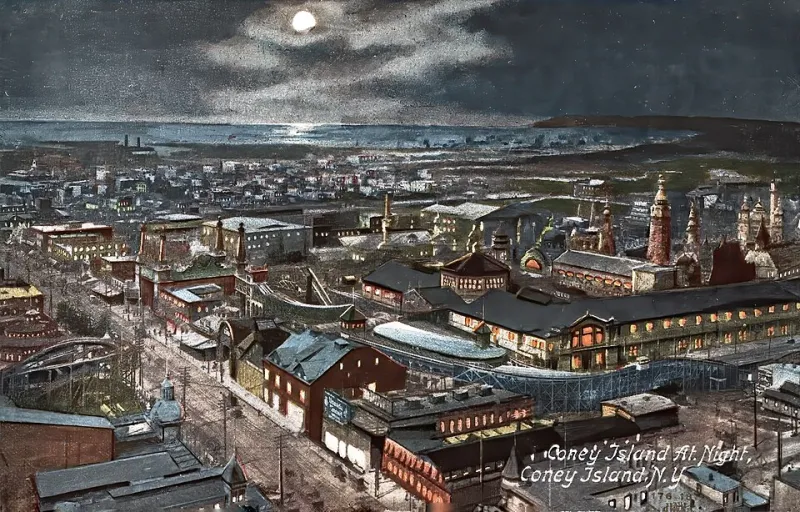
Photo: Harley Flowers from Mobile, USA, CC BY-SA 2.0, via Wikimedia Commons
Most great American industries trace their origins to a brilliant vision, a calculated risk, or a moment of entrepreneurial genius. The amusement park industry traces its origins, at least in part, to a fire, an insurance adjuster, and a business decision that was less a plan than a shrug.
The story of how Coney Island became the template for every theme park in America — every roller coaster, every flashing light, every carefully engineered sense of wonder — runs directly through a catastrophe that, by all rights, should have ended everything.
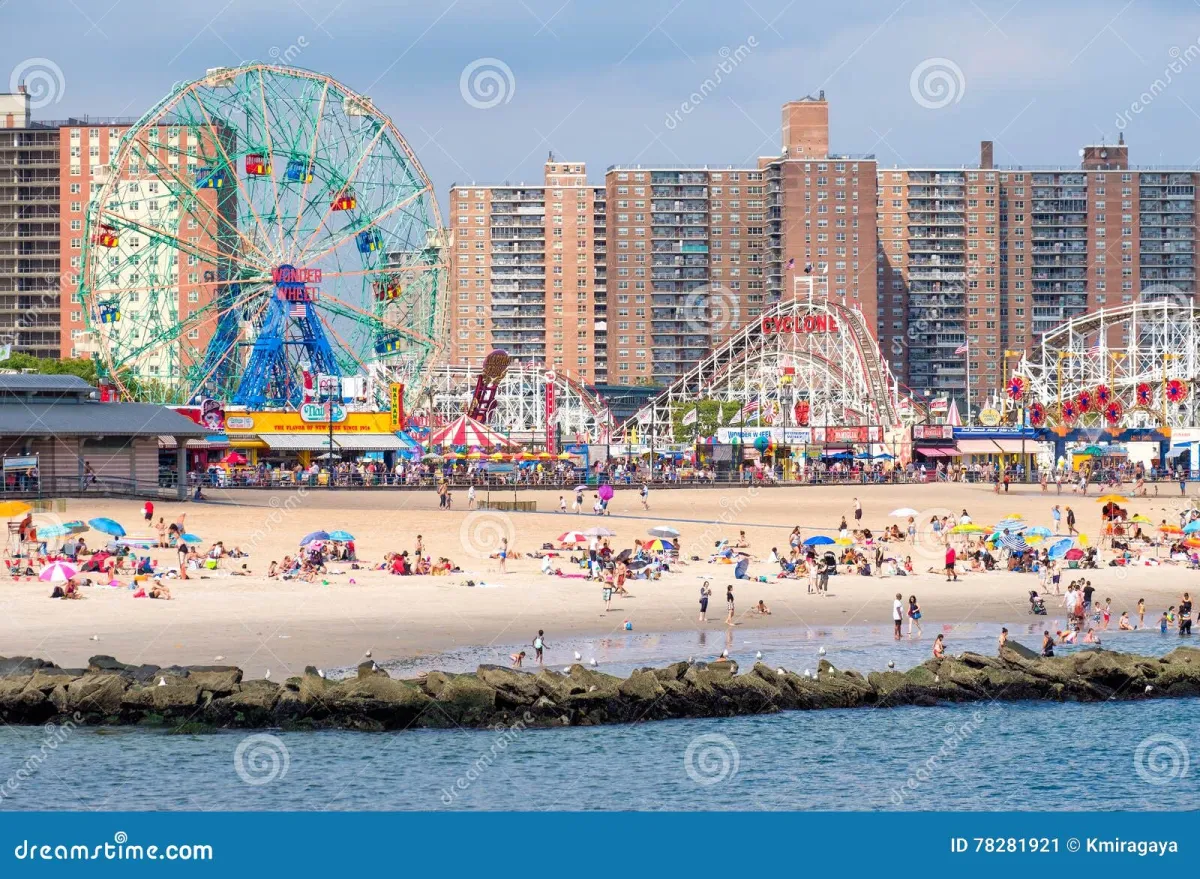 Photo: Coney Island, via thumbs.dreamstime.com
What Coney Island Was Before It Was Coney Island
By the 1890s, Coney Island was already a destination. The stretch of Brooklyn shoreline had been drawing New York City residents for decades, offering beaches, hotels, and the general chaotic pleasures of a seaside resort. It was popular, profitable, and — by the standards of the era — reasonably well organized.
What it wasn't yet was the thing it would become: a place defined by mechanical thrills, electric illumination, and the deliberate engineering of fantasy. That transformation required a catalyst. As it turned out, the catalyst was fire.
The resort complexes that occupied the prime Coney Island real estate were large wooden structures — beautiful in their way, but exactly the kind of buildings that burn spectacularly when something goes wrong. And in the 1890s, something went very wrong.
The Night Everything Burned
The fire that tore through the resort complex was not a minor incident. It was the kind of blaze that draws crowds from miles away and leaves nothing behind but ash, scorched foundations, and a very long conversation with an insurance company.
For the owners, the immediate aftermath was the particular flavor of despair that comes from watching something you've spent years building disappear in an evening. The resort was gone. The structures, the attractions, the carefully assembled infrastructure of a successful summer business — all of it reduced to rubble.
Then the insurance assessment came back.
The payout was, by the standards of the era, substantial. Generous, even. Generous enough that after the basic costs of clearing the site and rebuilding essential structures, there was money left over — a meaningful surplus that the owners hadn't expected and hadn't planned for.
At this point, the story turns on a question: what do you do with unexpected capital in the aftermath of disaster?
The Experiment Nobody Planned
The owners of the rebuilt Coney Island properties made a decision that was equal parts desperation and curiosity. Rather than simply reconstructing what had existed before — the hotels, the conventional resort amenities, the familiar pleasures that had drawn visitors in the first place — they used the surplus funds to try something different.
Mechanical rides had been appearing at fairs and expositions in rudimentary forms, but nobody had built them at scale, nobody had electrified an entire entertainment complex, and nobody had deliberately designed a space around the idea that the environment itself was the attraction. The rebuilt Coney Island properties — most famously Steeplechase Park, followed by Luna Park and Dreamland in the years that followed — did all three things simultaneously.
 Photo: Steeplechase Park, via i.pinimg.com
Steeplechase Park, opened in 1897 by George Tilyou, introduced mechanical rides as the centerpiece of the experience rather than a novelty on the margins. Luna Park, which opened in 1903, took the electric illumination concept to a scale that genuinely stunned visitors — over a million lightbulbs transforming the park into something that looked, to people who had grown up with gas lamps, like a vision from another world.
Dreamland went further still, constructing elaborate themed environments that asked visitors to suspend disbelief and inhabit a manufactured reality for the price of admission.
Why This Particular Combination Mattered
What makes the Coney Island story significant isn't just that these parks were popular — they were enormously, almost incomprehensibly popular, drawing millions of visitors annually at a time when getting to Brooklyn required real effort for most Americans. What matters is the template they established.
Every element of the modern theme park experience was present in prototype form at Coney Island in the early 1900s. The idea that a park should have a coherent identity rather than just a collection of attractions. The use of lighting and architecture to create an atmosphere distinct from the outside world. The mechanical ride as the central draw rather than the scenic backdrop. The deliberate engineering of wonder as a product you could sell by the hour.
Disneyland, when it opened in 1955, was explicitly influenced by the Coney Island model — Walt Disney had visited as a young man and absorbed the lesson that the environment mattered as much as the individual attractions. Every theme park that followed Disneyland inherited that same lesson, which traces back through Disney to Coney Island, and from Coney Island back to the fire that gave its owners the unexpected resources to experiment.
 Photo: Walt Disney, via allears.net
The Adjuster Who Accidentally Changed American Culture
It's worth pausing on the insurance adjuster for a moment, because that person's generosity — or accuracy, depending on how you look at it — was genuinely load-bearing in this chain of events.
If the payout had been smaller, the owners rebuild what they had and Coney Island remains a conventional resort. If it had been larger, perhaps they over-extend and collapse under the weight of ambition. The specific amount — enough to rebuild and experiment, not so much as to remove all financial pressure — created exactly the conditions that produced the innovation.
History is full of these moments where the precise calibration of an accident determines everything that follows. The Coney Island fire is a particularly clean example: too little damage and nothing changes, too much damage and nothing survives, but just the right amount of destruction produces an industry.
What Burns and What Remains
Coney Island itself had a complicated subsequent history. Steeplechase Park burned and was rebuilt. Luna Park burned twice. Dreamland burned in 1911 and was never rebuilt. The great resort complexes that pioneered the theme park concept were, with painful irony, repeatedly consumed by the same force that had accidentally created them.
But the template survived every fire. It spread across the country, embedded itself in American culture, and eventually produced the multi-billion-dollar theme park industry that employs hundreds of thousands of people and draws hundreds of millions of visitors every year.
All of it — every loop-the-loop, every themed land, every carefully designed moment of manufactured delight — carrying the faint genetic trace of a night in the 1890s when a wooden resort complex burned to the ground and someone looked at the insurance check and thought: what if we tried something completely different?
Sometimes the best business decision is the one you never meant to make.