The Clumsy Stagehand Who Accidentally Fireproofed Every Theater in America
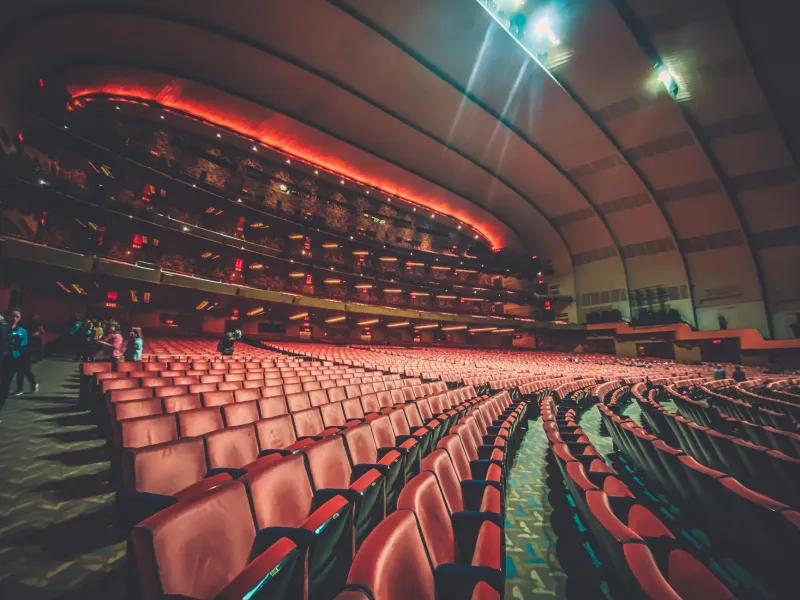
Somewhere in the back of every American theater — tucked just above the proscenium arch, invisible to anyone in the audience — hangs a thick, fireproof curtain. It almost never moves. Most theatergoers live their entire lives without ever seeing it drop. But if the unthinkable happens, that curtain is the only thing standing between a backstage fire and a packed house full of people with nowhere to run.
What most people don't know is that this curtain — now legally required in virtually every major performance venue in the United States — exists largely because one anonymous stagehand had a very, very bad night.
A Theater Industry Built on Wishful Thinking
By the 1880s, American theater was booming. Cities like New York, Chicago, and Philadelphia were building grand venues as fast as architects could design them — ornate, gaslit palaces stuffed with velvet, painted canvas, wooden scaffolding, and enough rope to rig a sailing ship. The backstage areas of these theaters were essentially enormous tinderboxes, layered with decades of dried paint, oil-soaked props, and curtains that would ignite from a candle flame at twenty paces.
Fire was not a theoretical risk. It was a recurring catastrophe. The Brooklyn Theatre fire of 1876 killed somewhere between 278 and 300 people. The Ring Theatre in Vienna went up in 1881 and killed nearly 400. Every few years, another venue burned, another tragedy unfolded, and theater owners across the country responded with their preferred strategy: hoping it wouldn't happen to them.
 Photo: Ring Theatre, via bpldcassets.blob.core.windows.net
 Photo: Brooklyn Theatre, via www.untappedcities.com
There were no standardized safety requirements. There were no fireproof barriers between the stage and the audience. There was, in most cases, not even a coherent evacuation plan. What there was, in abundance, was gas lighting — open flames burning just feet from painted canvas backdrops, right in the middle of a building designed to pack in as many people as possible.
Into this environment walked the stagehand.
The Accident Nobody Wrote Down
The precise details are frustratingly sparse, which is fitting for a story about a working-class theater employee who history never bothered to name. What the record does tell us is that in the late nineteenth century, a backstage incident at a New York theater — accounts vary on the exact venue — involved an accidental ignition of scenery or rigging during a live performance. The fire was contained before it spread to the house, but the near-miss was spectacular enough to force a conversation that the theater industry had been successfully avoiding for years.
The question that suddenly had no comfortable answer was devastatingly simple: if that fire had spread past the stage, what would have stopped it from reaching the audience?
The answer, as engineers and city officials began to examine the situation, was essentially nothing.
The Problem That Nobody Had Designed Around
Once people started actually studying the architecture of these grand theaters, the picture was grim. The stage and the auditorium were connected by a large open proscenium — the framed opening through which the audience watched the performance. This opening was designed to be as large and unobstructed as possible, because that was good for sightlines and acoustics. It was also, in the event of a backstage fire, a perfect chimney for pushing flames, smoke, and superheated gases directly into a room full of seated people.
Engineers began proposing what seemed, in retrospect, like an obvious solution: a non-combustible barrier that could be lowered across the proscenium opening in an emergency, sealing the stage off from the house and buying evacuating audiences enough time to escape.
The concept was straightforward. The execution took years of argument, failed prototypes, and competing designs before anything close to a workable version emerged. Early attempts used heavy iron panels that were prone to jamming. Later iterations experimented with asbestos-treated fabric — which worked better but introduced its own long-term problems. Eventually, engineers landed on designs using steel and treated materials that could drop quickly, seal reliably, and hold long enough to matter.
How a Near-Miss Became the Law
The real turning point came not from the stagehand's accident alone but from the disasters that followed in the years after it — most devastatingly, the Iroquois Theatre fire in Chicago in 1903, which killed more than 600 people in a building that had been open for barely a month and was marketed as "absolutely fireproof." The Iroquois had a fire curtain. It jammed during the emergency and never fully deployed.
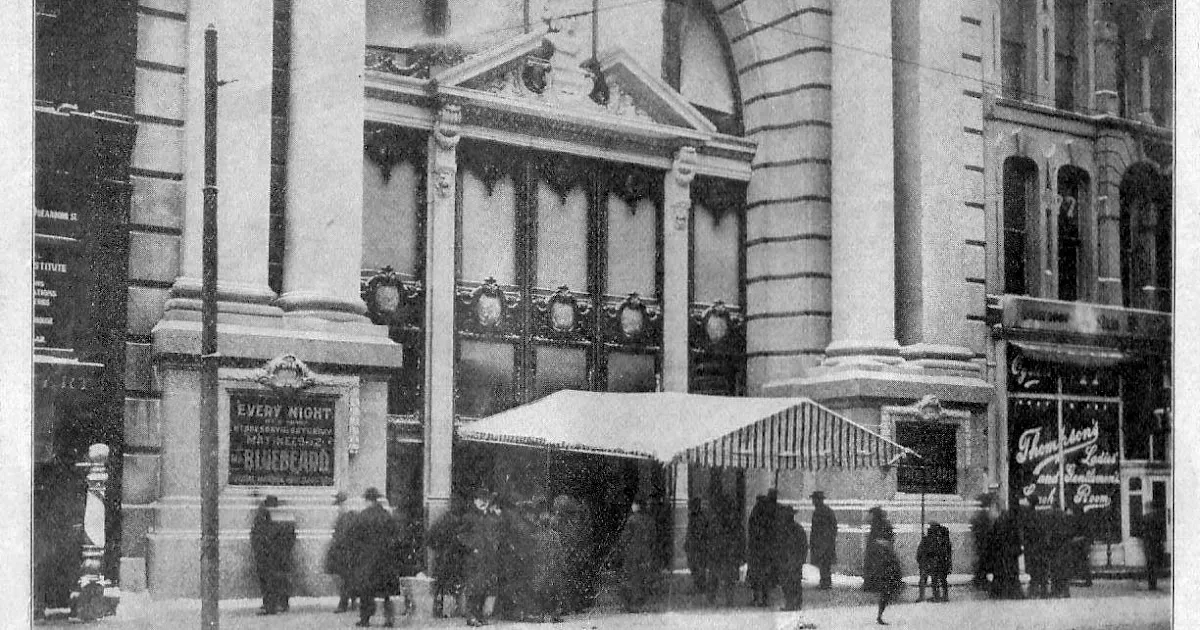 Photo: Iroquois Theatre, via 2.bp.blogspot.com
The public outrage from the Iroquois disaster was the moment American cities stopped treating theater fire safety as optional. New York, Chicago, and other major cities began passing building codes that mandated fireproof safety curtains in all new theater construction, with requirements for regular testing and maintenance. Those codes spread, were refined, and eventually became the foundation for the modern fire curtain standards that still govern theater construction today.
The Iroquois fire gets most of the historical attention, and rightfully so — it was a staggering tragedy. But the near-misses that preceded it, including the unnamed stagehand's backstage blunder, were the incidents that first cracked open the industry's complacency and forced engineers to start designing for the disaster everyone was pretending wouldn't happen.
The Curtain You'll Never See Drop
Today, fire curtains in American theaters are tested regularly, inspected by local fire marshals, and legally required to function. Broadway houses drop theirs during periodic safety checks. The devices have quietly become so standard that most people working in theater take them completely for granted.
That invisibility is, in a strange way, the whole point. The best safety device is the one you never need to use — the one that just hangs there, waiting, while every show runs perfectly and everyone goes home safe.
Somewhere in the long chain of events that produced that curtain is an unnamed stagehand who had a terrible night and accidentally made American theater a little harder to burn down. He probably got fired. He almost certainly never knew what he'd set in motion.
History has a funny way of working like that.