The Quiet Man Behind the Card Catalog: How a Cold War Spymaster Spent His Last Decades Recommending Novels
Everybody in Millhaven, Ohio knew Mr. Volkov. He was the guy at the public library who remembered what you liked to read. If you'd checked out a Western six months ago, he'd have another one waiting when you walked through the door. He attended every school fundraiser. He judged the county spelling bee four years running. He made terrible coffee and kept it warm on a hot plate behind the reference desk.
 Photo: Millhaven, Ohio, via millhavennorth.com
He was also, according to federal records declassified in 2003, one of the more consequential Soviet intelligence defectors of the entire Cold War era.
The story of Aleksei Dmitri Volkov — known to Millhaven as simply "Al" — is one of those tales so deeply strange that it almost requires you to sit down before you hear it. A man who had spent the better part of his career gathering intelligence for the USSR, who had been debriefed by the CIA across dozens of sessions spanning nearly two years, quietly retired into the most unremarkable American life imaginable. And for three decades, nobody in that small Ohio town had a single clue.
From Moscow to Langley to the Dewey Decimal System
Volkov defected in 1961, slipping away from a diplomatic function in Vienna in circumstances that intelligence historians still debate. What's not disputed is what happened next: he spent the better part of two years inside a CIA debriefing program, sharing what he knew about Soviet operations in Western Europe. By all accounts, the information he provided was significant enough that his handlers considered his case one of the more productive defections of the Kennedy era.
After the debriefing concluded, Volkov was resettled under a new identity through a program that, at the time, had no formal name and very little paperwork — a fact that would later make historians' jobs considerably harder. He was given a modest stipend, a new Social Security number, and a life in a town small enough that nobody would think to look twice at a quiet man with a slight accent who said he was originally from Minnesota.
He took a job at the Millhaven Public Library in 1963. He would not leave for thirty-one years.
 Photo: Millhaven Public Library, via fglibrary.co.uk
The Man the Town Thought They Knew
People who grew up in Millhaven during those decades remember Volkov with a warmth that borders on reverence. Former patrons describe a man who was endlessly patient with children, fiercely protective of the library's budget during lean municipal years, and quietly knowledgeable about an almost comically wide range of subjects — history, geography, languages, military strategy. Locals just figured he was well-read. Which, to be fair, he was.
He never married. He lived in a small house three blocks from the library and kept a garden that neighbors recalled as unusually meticulous. He attended the local Lutheran church without being particularly religious about it, in the way that small-town people sometimes do. He coached a youth chess club on Tuesday evenings.
He died in 1994, at 79, of a heart attack. The library closed for his funeral. The local paper ran a front-page obituary describing him as "a cornerstone of Millhaven's intellectual life." Nobody mentioned the USSR.
When the Files Came Open
The declassification that changed everything came in waves between 2001 and 2005, as the CIA began releasing documents related to Cold War-era defector programs under the Nazi War Crimes Disclosure Act's broader archival mandate. Volkov's file wasn't dramatic in its release — it was part of a batch of records that a historian at Ohio State University was combing through for an entirely different project.
What the file revealed was methodical and astonishing in equal measure. Volkov had not been a low-level operative. He had worked within a directorate responsible for coordinating intelligence assets across three Western European countries. The information he provided to the CIA during his debriefing had contributed to the identification of at least two double agents operating within NATO-adjacent networks. His handlers' internal assessments described him as "extraordinarily cooperative" and "possessed of a remarkable memory for operational detail."
And then, in 1963, he became the guy who helped you find a good mystery novel.
Millhaven's Very Complicated Reaction
When the Ohio State historian published her findings in a 2004 journal article, the reaction in Millhaven was — by the accounts of local reporters who covered it — genuinely difficult to categorize. Residents were not angry, exactly. Many were simply bewildered. A man they had trusted with their children, their library, their community institution, had been living an entirely fabricated personal history. And yet, in every way that had actually mattered to them, he had been exactly who he appeared to be.
"He never lied to us about anything that affected us," one longtime patron told the Columbus Dispatch at the time. "He just didn't tell us everything."
That distinction — between active deception and strategic omission — became something of a philosophical talking point in the community. The library board voted to hang a small plaque in the reading room acknowledging Volkov's service. They left out the Soviet part. Nobody could quite agree on whether that was appropriate or just easier.
The Strangeness That Doesn't Quit
What makes Volkov's story so persistently strange isn't the espionage. It's the arithmetic of it. The man spent roughly a decade operating at the center of Cold War intelligence. He then spent three times that long recommending Agatha Christie paperbacks to retirees in rural Ohio. The second life was longer, quieter, and by every available measure, more deeply woven into the fabric of actual human community than the first.
The CIA, for its part, has never officially commented on the specifics of his case. His personnel file remains partially redacted. There are pages still sealed.
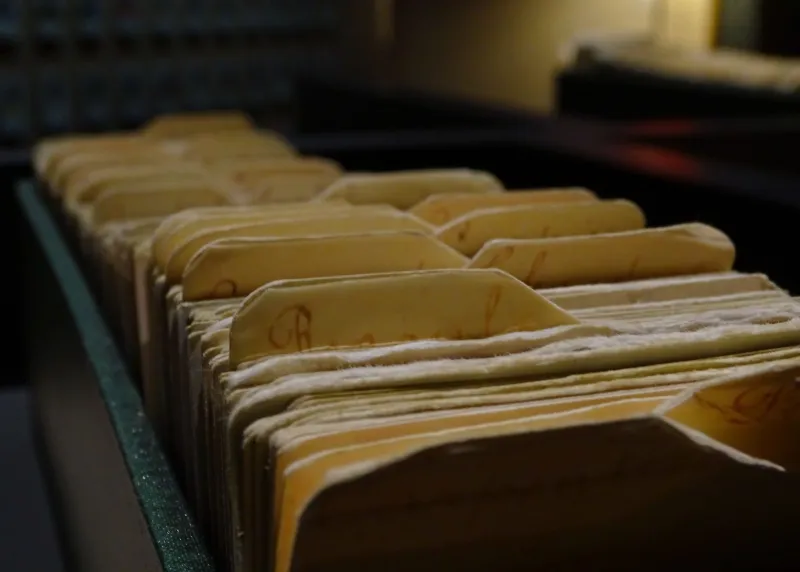
Back in Millhaven, the library he ran for thirty-one years is still open. The hot plate behind the reference desk is long gone. But if you ask the right staff members about the old card catalog — the physical one, in the back room, that nobody's had the heart to throw away — they'll tell you it's organized in a way that's slightly unusual. Logical, meticulous, and just a little bit unlike anything else they've ever seen.
Exactly the kind of thing you'd expect from a man who was very, very good at keeping things in order.