They Named Their Town After a Railroad Baron — He Took the Compliment and Built the Tracks Somewhere Else
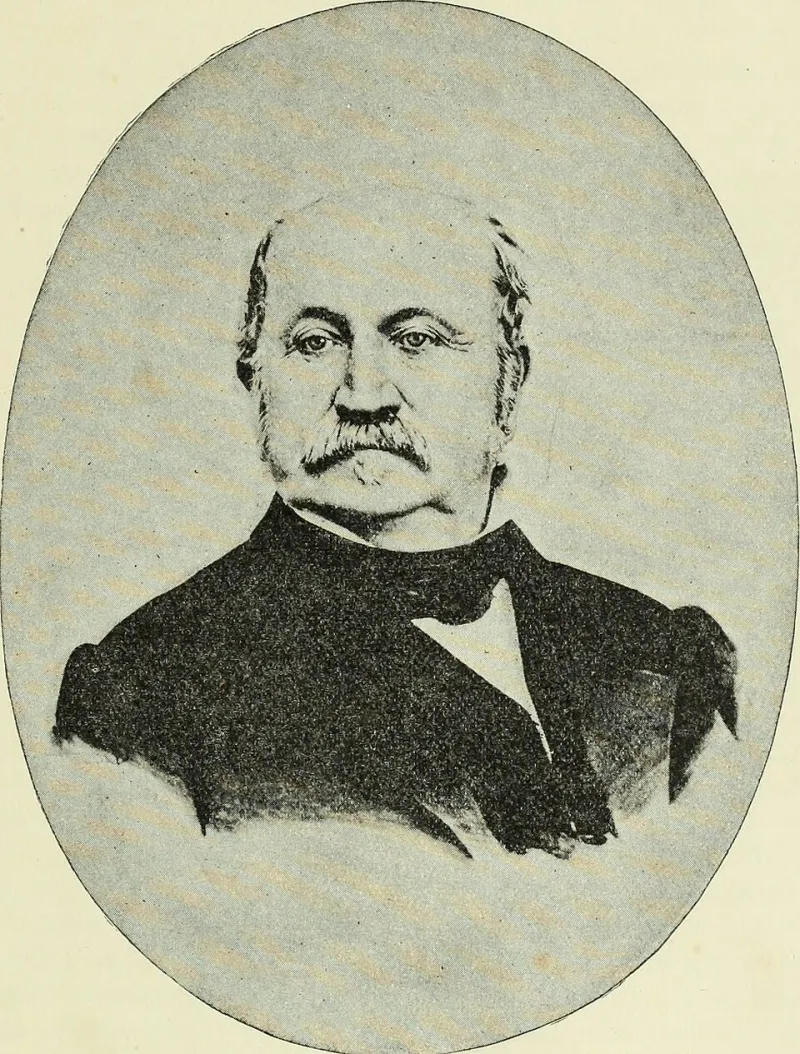
Photo: Internet Archive Book Images, No restrictions, via Wikimedia Commons
Imagine your town is struggling. The nearest rail connection is a day's ride away. Merchants are watching commerce drift toward better-connected competitors. Farmers can't move their grain fast enough to matter. And somewhere in an oak-paneled office in Chicago or Kansas City, a single man is drawing lines on a map that will determine whether your community lives or slowly dies.
 Photo: Kansas City, via images.fineartamerica.com
Now imagine your town council's solution is to name the whole place after him.
This is not a hypothetical. This happened. And the ending is exactly as grim as you're probably expecting.
The Railroad Was Everything
It's almost impossible to overstate what a railroad connection meant to a frontier Kansas town in the 1880s. The transcontinental lines had already transformed the American West, and the secondary and tertiary rail networks spreading out from the main trunks were doing the same thing at the local level — determining which towns became regional hubs and which ones quietly faded.
The calculus was brutally simple. A town with a rail stop could ship grain, receive goods, attract businesses, and grow a tax base. A town without one was dependent on wagon roads that turned to mud in spring and froze solid in winter. Distance from the rail line wasn't just an inconvenience. It was an economic death sentence administered slowly.
Railroad executives knew this. They were not shy about using it.
Route decisions for new lines were made based on a combination of geography, engineering logistics, existing traffic patterns, and — not infrequently — which towns and counties were willing to offer the most attractive incentives. Land grants, tax abatements, free right-of-way easements, cash bonuses from local boosters: all of it was on the table. Towns competed furiously, and the railroad men held all the cards.
The Scheme That Seemed Brilliant at the Time
The small Kansas community at the center of this story — sources vary on the precise town, as records from many dissolved frontier settlements are incomplete — had watched neighboring communities offer cash and land to attract rail investment with limited success. They didn't have much cash. What they had was a civic council creative enough to try something different.
Someone proposed naming the town after the railroad executive whose company was actively surveying routes through the region.
The logic was not entirely crazy. These men had enormous egos and were accustomed to having things named after them — usually after they'd already done something worth commemorating. Doing it preemptively, as an act of flattery-as-investment, was a gamble, but it was the kind of gamble a town with limited options takes.
The council voted. The measure passed. They went through legitimate legal proceedings to formally change the town's name — no small thing, since it required updating land records, redrawing official county documents, notifying state authorities, and reprinting everything from letterhead to posted ordinances. Local business owners had to update their signage. The post office had to be notified. The whole apparatus of civic identity was overhauled in honor of a man who had never set foot in the place.
They sent him a formal letter informing him of the honor. They probably expected gratitude. What they got was something worse: genuine warmth.
He Was Very Touched, Apparently
The executive responded graciously. He acknowledged the tribute. He expressed appreciation for the community's confidence in his company's vision for the region. He did not, at any point, make a commitment about where the tracks would go.
He didn't need to. He already knew where they were going.
The survey work had been underway long enough that route decisions were effectively made before the town's letter ever arrived. The engineering considerations — grade, water access, existing settlement density along the corridor — all pointed to a route that ran roughly twenty miles north of the newly renamed community.
When the announcement came, the town was still called by his name. It would remain so, technically, for years afterward. But the rail line that was supposed to be its salvation was being built for the benefit of somebody else's community.
What Happens to a Town Without a Train
The consequences unfolded predictably and without mercy. The communities along the actual rail corridor grew. Businesses relocated toward the tracks. Farmers in the region found it more practical to haul their grain to the new depot towns than to stick with the old commercial relationships built around the stranded settlement.
Population drifted. Young people left for places with more economic momentum. The businesses that stayed found their customer base shrinking. The tax base eroded. Infrastructure maintenance became harder to fund.
The town — still bearing the name of the man who'd effectively abandoned it — eventually dissolved. The legal entity ceased to exist. The physical location became farmland, then just land. Today, if you know exactly where to look, you might find the faint outline of old foundations or a scatter of bricks where a Main Street once ran. Most people don't know where to look.
The Larger Pattern
What makes this story more than just a sad footnote is what it reveals about the extraordinary, near-absolute power that railroad corporations held over frontier American life. Towns didn't just compete for rail access — they debased themselves for it. They offered land, money, naming rights, and apparently their entire civic identity, all in hopes of catching the attention of men who were operating at a scale that made individual communities essentially invisible.
The Kansas town that renamed itself wasn't naive. It was desperate. And desperation, in the railroad era, rarely produced good outcomes for the people at the bottom of the power structure.
The executive's name, by the way, is still technically attached to the location on some historical survey maps. He got his memorial. The town got nothing except a stranger's name to carry on its way out of existence.