Eleven Years of Ghost Money: The Wisconsin Town That Ran Its Own Accidental Economy
Photo: David E. Funderburk Co. (likely deceased), Public domain, via Wikimedia Commons
There's a version of this story where someone goes to prison. In the version that actually happened, the federal government shrugged, quietly closed its file, and walked away.
Sometime in the early 1900s, a small Wisconsin community found itself doing something that would make any economist's eye twitch: running a regional economy on currency issued by a bank that had never been chartered, never been approved, and — in any legal sense that mattered — had never existed at all.
And it worked. For eleven years.
How Do You Accidentally Print Money?
The whole thing started with the kind of mistake that feels almost too mundane to believe. A print shop handling a run of banknotes for a local financial institution made an error in the institution's name. The bills that came off the press referenced a bank whose charter had either lapsed, been misrecorded, or — depending on which account you trust — was never properly filed with state authorities in the first place.
Nobody caught it right away. The notes looked official. They had the right weight, the right dimensions, the right general air of legitimacy that paper currency carried in an era when dozens of small regional banks were issuing their own notes anyway. The American banking system before the Federal Reserve Act of 1913 was a gloriously chaotic patchwork of local currency, and in that environment, one more set of unfamiliar bills barely registered as unusual.
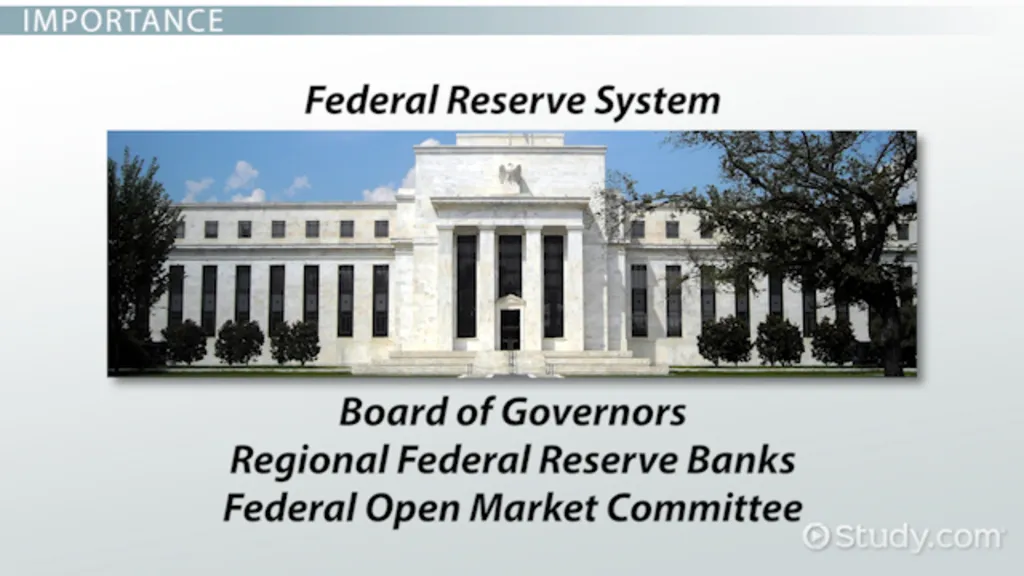 Photo: Federal Reserve Act of 1913, via study.com
So the notes went into circulation. Merchants accepted them. Farmers used them to settle debts. Traveling salesmen tucked them into their billfolds without a second thought and spent them three counties over.
A Town That Didn't Know It Was Counterfeiting
Here's the part that makes the story genuinely strange rather than just mildly interesting: almost nobody involved understood they were doing anything wrong. The community wasn't running a scam. There was no shadowy ringleader printing bills in a basement. The people using the notes believed — reasonably, given how the bills looked — that they were backed by a real institution.
In a way, they were right. The notes were backed by trust, by habit, and by the simple fact that your neighbor took them, so you took them too. Economists have a term for this: a currency works because people believe it works. The Wisconsin community had accidentally built a functioning demonstration of that principle.
Local commerce hummed along. The notes changed hands at the feed store, at the dry goods counter, at the tavern on Saturday night. Nobody was getting rich off the situation. Nobody was being cheated in any obvious way. The bills just... circulated, doing what money does, untethered from any legal foundation whatsoever.
When the Feds Finally Showed Up
Federal investigators didn't find the situation through brilliant detective work. By most accounts, they stumbled onto it — a note turned up during a routine examination of currency flowing through a regional Federal Reserve branch, someone looked a little closer than usual, and suddenly a very confused auditor was staring at paperwork that didn't add up.
The investigation that followed had to grapple with a problem that was almost philosophical in nature. Who exactly had committed a crime here? The original print shop had made an error, not a deliberate fraud. The merchants and farmers using the bills had no reason to suspect anything was wrong. There was no identifiable victim — no one had lost money, no one had been defrauded, and the local economy had functioned perfectly well throughout the entire episode.
Prosecutors looked at the situation and saw something that would be extraordinarily difficult to argue in front of a jury. Proving criminal intent requires, at minimum, demonstrating that someone knew what they were doing was illegal. In a town full of people who had simply accepted the same bills everyone else was accepting, that was going to be a very hard case to make.
The Government's Quiet Exit
The resolution — if you can call it that — was almost anticlimactic. Federal authorities essentially decided the whole affair wasn't worth the legal headache. The notes were quietly pulled from circulation, the investigation wound down, and the government moved on to problems that were easier to prosecute.
No charges. No major fines. Just a bureaucratic acknowledgment that reality had, once again, refused to cooperate with the rulebook.
What's remarkable isn't that the scheme collapsed — it's how long it didn't. For eleven years, a community's economy ran on the confidence its members placed in pieces of paper that had no legal right to exist. When you strip away the regulatory framework, the chartered institutions, and the official seals, that's actually what all money is: a collective agreement to believe in something.
The Wisconsin town just happened to arrive at that agreement by accident.
The Bigger Picture Nobody Wanted to Discuss
The episode landed in the middle of a period when American banking was undergoing dramatic transformation. The Federal Reserve Act had just reshaped how currency worked nationally, and regulators were actively trying to bring order to the wild, decentralized money system that had defined the previous century.
In that context, a small Wisconsin community running ghost currency for over a decade was both a historical footnote and a quietly embarrassing reminder of just how informal the whole system had been. The government's decision not to prosecute anyone wasn't just pragmatic — it was almost an admission that the rules themselves had been fuzzy enough that blaming ordinary people for not following them perfectly was a stretch.
The bills are gone now, presumably destroyed or tucked into the collections of currency enthusiasts who may not even know what they have. But the story they represent — of an entire regional economy operating in cheerful defiance of the legal fine print — remains one of the more quietly absurd chapters in American financial history.
Money, it turns out, is mostly a story people agree to tell each other. In Wisconsin, for eleven years, they just happened to be telling it with the wrong paperwork.